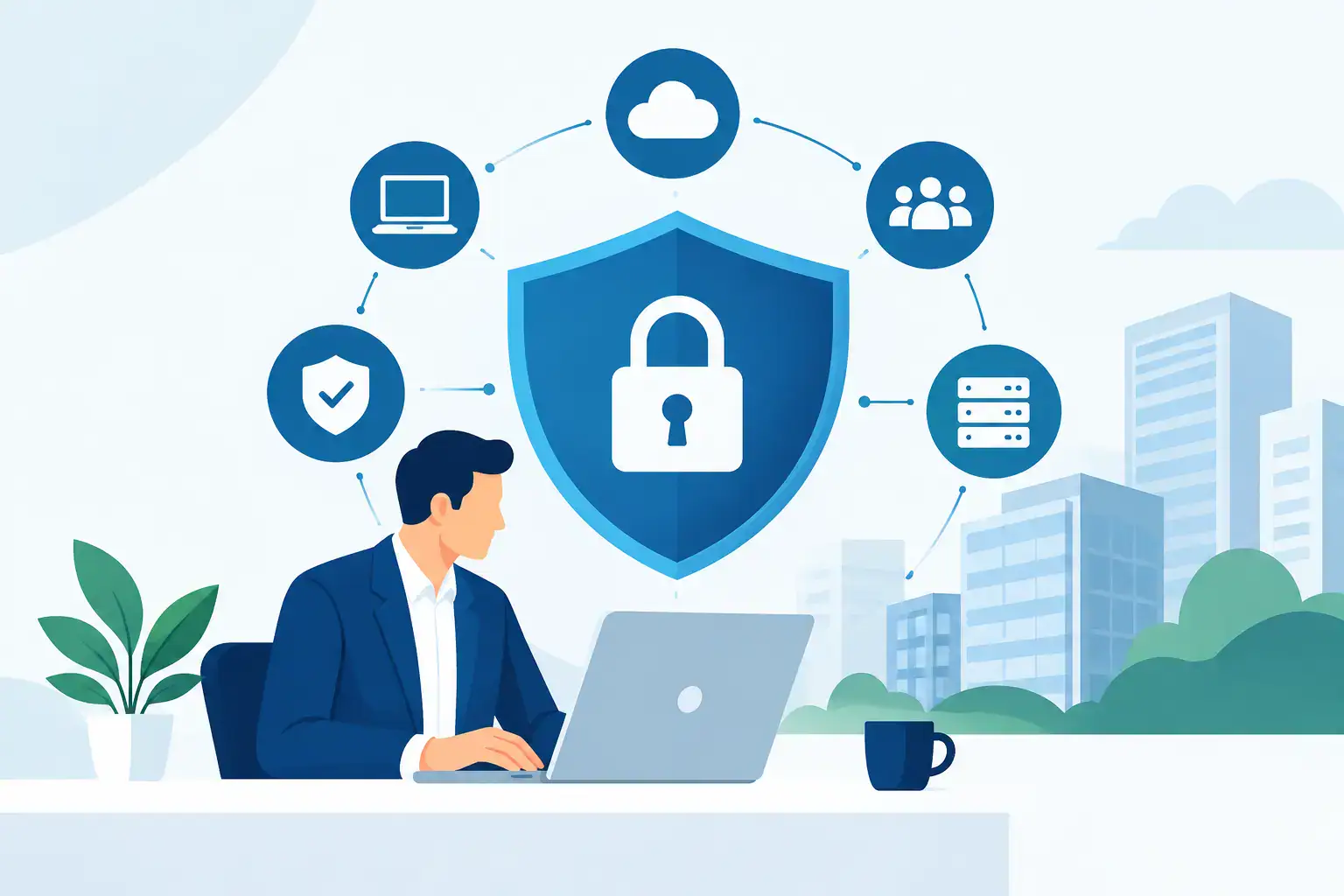

A server failure at 9am, a phishing email opened before lunch, remote staff unable to connect by mid-afternoon – for many smaller businesses, that is not a bad day in theory. It is what happens when IT is patched together instead of properly managed. Managed IT services for SMEs are designed to stop those disruptions becoming expensive patterns, giving businesses reliable support, stronger security and a clearer plan for keeping operations running.
For most SMEs, the question is not whether technology matters. It is whether the business can afford the downtime, risk and distraction that come with managing it reactively. Hiring a full internal team is often unrealistic, yet relying on ad hoc fixes usually leads to recurring problems, inconsistent systems and weak visibility over security. That is where a managed service relationship makes a practical difference.
What managed IT services for SMEs actually mean
Managed IT services for SMEs go beyond having someone to call when a laptop fails or email stops syncing. The model is built around ongoing responsibility. Instead of waiting for faults, a managed provider monitors systems, supports users, maintains infrastructure, strengthens security and helps plan improvements before problems interrupt the business.
That matters because small and medium-sized organisations rarely suffer from one single IT issue. More often, they deal with a combination of ageing devices, unclear backup arrangements, poor documentation, fragmented software, unsupported networking equipment and rising cyber risk. Each issue may seem manageable on its own. Together, they create instability.
A proper managed service should bring those moving parts under control. That typically includes user support, device management, patching, security oversight, cloud administration, backup and recovery, connectivity and advice on future needs. In practical terms, it gives decision-makers one accountable partner rather than a chain of suppliers and emergency call-outs.
Why SMEs choose managed IT services
The biggest driver is usually business continuity. If systems go down, staff cannot work, customers cannot be served and internal pressure rises quickly. Smaller businesses feel that disruption more sharply because they have less slack in the system. One unavailable line-of-business application or one failed internet connection can affect the whole team.
Managed support reduces that exposure by making IT an operational service rather than an occasional repair job. Issues are spotted earlier, users get help faster and routine maintenance is handled consistently. That improves productivity, but it also protects management time. Owners and operations leads should not be chasing broadband faults, recovering files or deciding how to respond to suspicious emails.
Cost clarity is another factor. Building an in-house capability with broad enough skills across support, networking, Microsoft 365, backup, cybersecurity and telecoms is expensive. For many SMEs, managed services provide access to that range of expertise in a more predictable way. It is not always the cheapest option on paper, but it is often far less costly than repeated downtime, security incidents or rushed replacement projects.
The services that matter most
Not every SME needs the same package, and that is one of the first trade-offs worth recognising. A 15-person professional services firm has different priorities from a warehouse operation or a multi-site retailer. Still, most businesses need a dependable foundation.
Day-to-day IT support remains central. Staff need quick help with devices, software access, printing, connectivity and account issues. If support is slow or inconsistent, productivity drops in small ways all day long. Those small losses add up.
Security is now just as important as support. Email filtering, endpoint protection, access controls, patch management and user awareness all play a part. The risk for SMEs is often underestimated because they assume attackers only target larger organisations. In reality, smaller businesses are often attractive precisely because security is weaker and internal oversight is limited.
Backup and recovery also deserve more attention than they often receive. Many businesses think they are backed up until they need to restore something urgently. A managed provider should not only run backups but test recovery and make sure critical systems can be restored within an acceptable timeframe. There is a big difference between having a backup somewhere and having a recovery plan that works under pressure.
Cloud services are another common area of value. Whether a business is moving to Microsoft 365, shifting files to the cloud or supporting hybrid staff, cloud adoption needs managing properly. Without clear permissions, device policies and user controls, cloud convenience can turn into cloud confusion.
Communications and connectivity are often overlooked too. Internet resilience, secure remote access and VoIP telephony all affect how smoothly a business runs. If these are split across multiple suppliers with no single view of performance, faults can take longer to trace and fix.
What good managed IT support looks like
The difference between a supplier and a partner is usually felt in the day-to-day experience. Good managed IT support is responsive, but it is also structured. There should be clear processes, documented systems, service reporting and a realistic understanding of the business itself.
That means the provider should know which systems are business-critical, who the key users are, what the recovery priorities look like and where the main risks sit. Support should not start from scratch every time a ticket is raised. It should build on familiarity, documentation and accountability.
This is also why bundled capability matters. SMEs often end up juggling one company for phones, another for broadband, another for cloud licensing and a freelancer for ad hoc support. That fragmentation creates gaps. When something fails, responsibility becomes blurred. A joined-up provider can remove much of that friction by covering infrastructure, communications, security and support together.
For businesses in growth, transition or relocation, that joined-up model becomes even more valuable. Office moves, new starters, hardware refreshes and site expansions all put pressure on systems. If each change has to be co-ordinated across separate suppliers, the risk of delay and disruption rises.
How to assess managed IT services for SMEs
Choosing managed IT services for SMEs should not come down to who promises unlimited support at the lowest monthly cost. The more useful test is whether the provider can support the business as it actually operates.
Start with response and coverage. When users need help, how quickly can they expect it? What happens outside normal working hours? What systems are monitored proactively, and what is only handled when reported?
Then look at security depth. Basic antivirus is not a security strategy. Ask how the provider handles patching, email threats, access control, device protection and backup testing. If they cannot explain these in business terms, that is usually a warning sign.
Documentation and visibility matter too. SMEs should know what assets they have, what is covered, what needs replacing and where vulnerabilities or risks may sit. A provider should bring order, not mystery.
It is also worth assessing how broad the service really is. If cloud, support, telecoms, recovery and cybersecurity are all managed separately, there may still be value in consolidating. Businesses such as Host-It are built around that integrated support model because operational resilience rarely comes from one service in isolation.
Finally, consider fit. Some providers are very technical but hard to reach. Others are friendly but reactive. The best fit for an SME is usually a provider that combines technical control with practical responsiveness – someone who can resolve urgent issues quickly while also helping the business make better long-term decisions.
When managed services are the wrong fit
Managed services are not automatically right for every business. A company with a mature internal IT team may only need specialist security support or project assistance. A microbusiness with very limited reliance on shared systems may not need a full managed agreement yet.
There is also a difference between needing support and being ready to standardise. Managed services work best when a business is willing to improve weak infrastructure, replace outdated devices and follow sensible security policies. If the expectation is to keep every legacy problem indefinitely while still achieving modern reliability, results will be limited.
That said, many SMEs do not need perfection before they start. They need a path from instability to control. A good provider should be able to take over a messy environment, prioritise the highest risks and improve things in stages.
The real value is fewer interruptions
Most SME leaders are not looking for impressive technical language. They want staff to stay productive, systems to remain available and problems to be solved before they become operational headaches. That is the real case for managed IT services. Not more technology for its own sake, but fewer interruptions, clearer accountability and stronger protection around the systems the business depends on.
If your current IT setup still relies on crossed fingers, informal fixes and too many suppliers, the issue is not just inconvenience. It is exposure. The right managed support model gives your business room to work, grow and recover when something goes wrong – which is exactly what dependable IT should do.