
If you are responsible for keeping a business running, the difference between IT security and cyber security is more than a wording issue. It affects how you assess risk, where you invest, and whether your systems are protected against the problems that actually interrupt trading. For SMEs, getting that distinction right can help prevent gaps that lead to downtime, data loss, or expensive recovery work.
What is the difference between IT security and cyber security?
The simplest way to look at it is this: IT security is broader, while cyber security is more focused.
IT security covers the protection of your entire information technology environment. That includes hardware, software, networks, servers, devices, user access, backups, and the policies that govern how systems are used. It is concerned with keeping business technology available, secure, and functioning properly.
Cyber security sits within that wider picture. It focuses specifically on protecting systems, networks, devices, and data from digital attacks. Think phishing emails, ransomware, account compromise, malicious software, and attempts to gain unauthorised access through the internet or connected systems.
So, when people ask about IT security versus cyber security, the practical answer is that cyber security is a key part of IT security, but it is not the whole of it.
Why the distinction matters for SMEs
For a smaller business, the two terms often get used interchangeably because the same provider may handle both. That is understandable, but it can create blind spots.
If a company thinks only in cyber security terms, it may focus heavily on antivirus, firewalls, and staff awareness training while overlooking wider operational protections such as backup testing, device lifecycle management, access controls for former staff, or physical safeguards for on-site equipment. Those issues may not sound dramatic, but they are often what turn a manageable incident into prolonged disruption.
On the other hand, if a business treats security only as a general IT housekeeping task, it can underestimate the speed and sophistication of modern cyber threats. A tidy server room and updated laptops are useful, but they will not stop a convincing phishing attack or a compromised Microsoft 365 account from causing serious damage.
For most SMEs, the real goal is not to decide which term matters more. It is to make sure both areas are covered as part of a joined-up protection strategy.
IT security: the wider operational view
IT security is closely tied to business continuity. It looks at how technology is set up, controlled, maintained, and recovered if something goes wrong.
That includes technical controls such as password policies, user permissions, patch management, network segmentation, secure remote access, and endpoint management. It also includes practical safeguards like backup routines, disaster recovery planning, hardware disposal, and making sure only the right people can access sensitive systems.
In a business setting, IT security is often about reducing preventable risk across day-to-day operations. If an employee loses a laptop, if a server fails, if a former member of staff still has login access, or if backups have never been properly tested, those are IT security issues as much as they are operational ones.
This is why IT security often sits alongside managed support and infrastructure planning. It is not only about defending against attackers. It is also about keeping systems controlled, stable, and recoverable.
Cyber security: the threat-focused discipline
Cyber security is more directly concerned with hostile activity in the digital environment.
It deals with identifying threats, preventing attacks, detecting suspicious behaviour, and responding when an incident occurs. Common cyber security measures include email filtering, multi-factor authentication, endpoint detection, firewall protection, vulnerability scanning, security monitoring, and staff training to reduce the chance of social engineering success.
For SMEs, cyber security often becomes most visible when there is a rise in ransomware, invoice fraud, or account takeovers. These attacks can arrive through ordinary business tools such as email, cloud platforms, mobile devices, and remote access systems. That is why cyber security is not only a concern for large enterprises. Smaller firms are frequent targets because they may have valuable data but fewer internal resources.
A strong cyber security approach accepts that attacks will be attempted. The focus is on reducing the chance of compromise and limiting the damage if one gets through.
Where IT security and cyber security overlap
In practice, there is a lot of overlap. The same control can support both disciplines.
Take multi-factor authentication. It is a cyber security control because it helps prevent unauthorised account access. It is also part of IT security because it improves overall access management. Backups are another good example. They support business continuity, which is a core IT security concern, but they are also essential in recovering from ransomware, which is clearly a cyber security issue.
This overlap is why many SMEs benefit from a single managed partner rather than treating infrastructure, support, and security as separate conversations. Security gaps rarely appear in neat categories. They tend to sit in the handover points between systems, suppliers, and responsibilities.
Common examples that show the difference
A few real-world scenarios make the distinction easier to understand.
If a staff member clicks a malicious email link and enters their Microsoft 365 credentials into a fake login page, that is a cyber security issue. The threat came through a digital attack designed to steal access.
If the same business has no proper offboarding process and former employees still have active accounts months after leaving, that is primarily an IT security issue. There may be no active attacker involved, but the business still has unnecessary exposure.
If a server room is left unsecured and critical equipment can be tampered with or removed, that sits more naturally under IT security because it concerns the wider protection of business technology assets.
If a company is hit with ransomware that encrypts shared files, that is cyber security. But whether the business can restore quickly depends on IT security measures such as backup integrity, recovery procedures, and network design.
These examples show why one area cannot carry the full weight on its own.
Which matters more?
For most organisations, that is the wrong question. It depends on the business, its systems, its risk profile, and how reliant it is on cloud platforms, remote working, or regulated data.
A professional services firm handling sensitive client information may place greater emphasis on identity controls, email protection, and monitoring for suspicious access. A business with ageing on-site infrastructure may need urgent attention on patching, backup resilience, and hardware risks. A company with multiple locations or mobile users may need stronger secure connectivity and device management.
The more useful question is whether your current setup covers both the broad operational controls of IT security and the active threat protection of cyber security.
What SMEs should focus on in practice
For most small and medium-sized businesses, security works best when it is practical, layered, and maintained over time.
That starts with a clear view of your systems, users, devices, and data. You cannot protect what you do not properly track. From there, access should be controlled tightly, software kept up to date, and backups tested rather than assumed to work. Staff should know how to recognise suspicious emails and what to do if something does not look right.
It also helps to think in terms of resilience rather than perfection. No business can remove every risk. What it can do is reduce exposure, improve visibility, and make recovery faster if an incident happens.
This is where an integrated support model tends to make the most difference. When IT support, infrastructure management, and security are handled together, decisions are less fragmented. Protections can be built around how the business actually operates, not just around a checklist of tools. For SMEs that do not want the cost and complexity of a large internal team, that joined-up approach is often the most realistic way to stay protected and productive.
The better way to think about the difference between IT security and cyber security
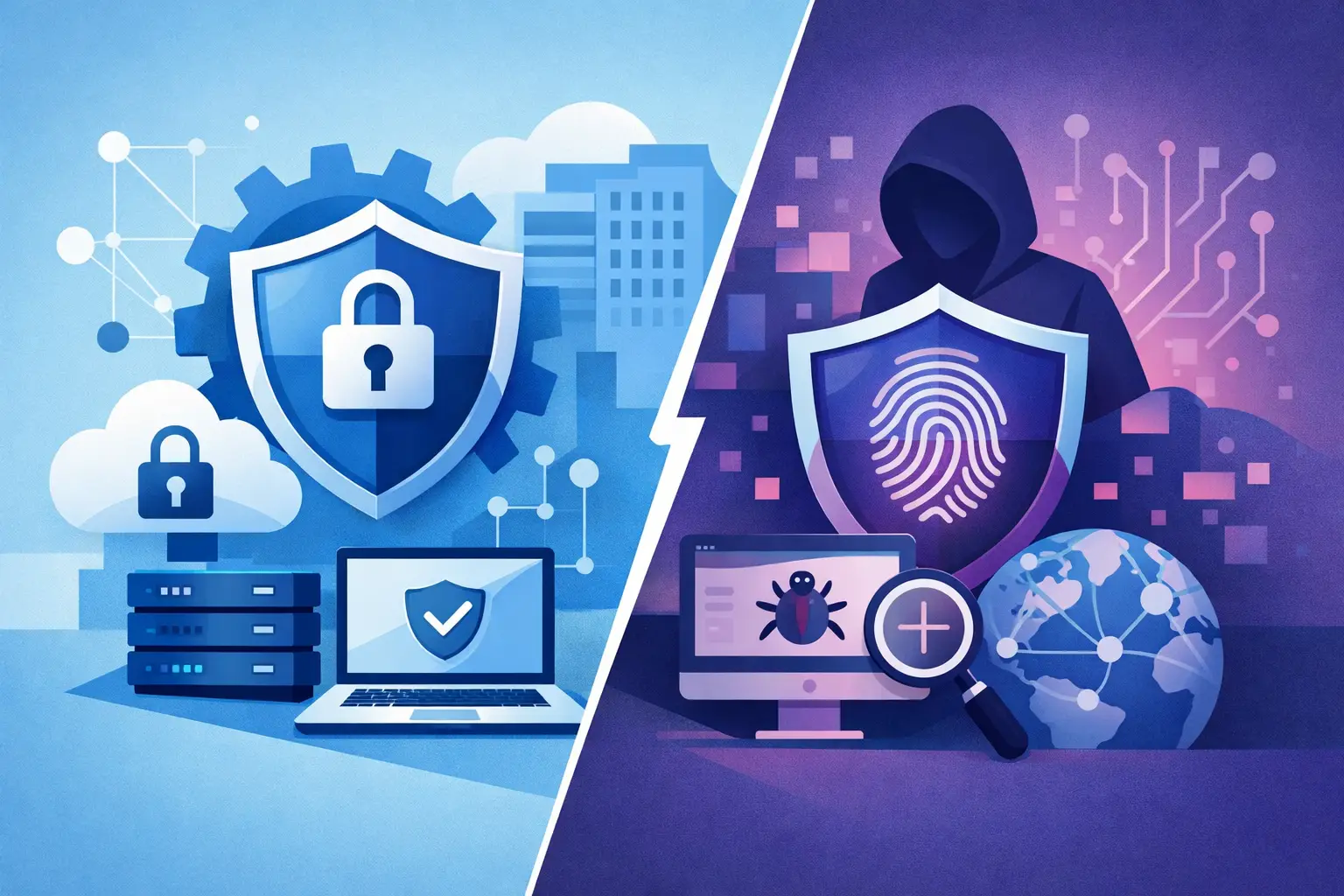
A useful way to frame it is this: cyber security helps stop digital attacks, while IT security helps protect and control the wider technology environment your business depends on.
One is threat-led. The other is environment-led. Both support business continuity.
If your business only focuses on one side, you are likely to leave avoidable gaps somewhere else. A secure business is not simply one that blocks threats. It is one that can keep operating, recover quickly, and give staff the systems they need without creating unnecessary risk.
That is usually the point where security stops being a technical discussion and becomes a business one. When your IT and cyber protections work together, the result is not just fewer incidents. It is less disruption, more confidence, and a stronger foundation for day-to-day operations.
The best next step is often a simple one: look at where your business is vulnerable, not just where it is already protected.
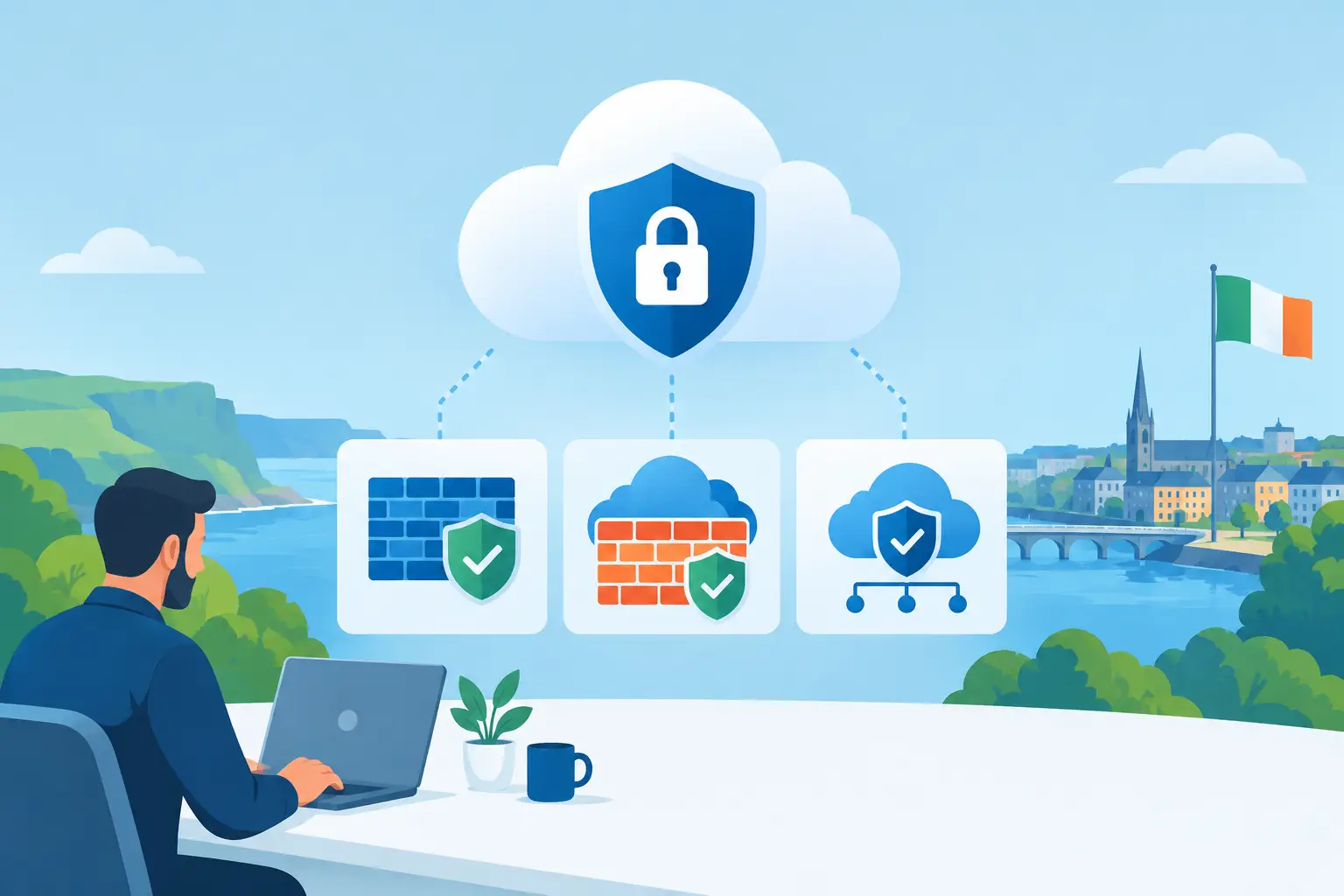
For a practical view of how security is built into the standard service, see our cyber security services in Ireland.