
Monday morning starts with a locked file server, staff unable to sign in, and customers waiting for answers. For many SMEs, that is when cybersecurity for businesses stops feeling like an abstract IT concern and becomes an operational problem with immediate cost. Lost hours, missed orders, disrupted phones, and the pressure of making a fast decision all add up quickly.
For smaller organisations, the challenge is rarely a lack of awareness. Most decision-makers know cyber risk is real. The problem is that protection often grows in bits and pieces – antivirus here, cloud apps there, a basic firewall from years ago, and backups nobody has tested properly. That patchwork leaves gaps, and attackers tend to find the gap that causes the most disruption.
Why cybersecurity for businesses is really about continuity
Security is often framed as a technical issue, but for most businesses it is a continuity issue first. If staff cannot access systems, if phones are down, if shared files are encrypted, or if customer data is exposed, the business slows or stops. That affects revenue, service, reputation, and compliance in one hit.
This is why the most effective approach is not simply buying more tools. It is building a reliable setup where security, support, backup, user access, and recovery planning work together. A good security posture should reduce risk, but it should also help your team keep working when something goes wrong.
There is no single control that solves everything. A business handling sensitive client records may need tighter access controls and monitoring than a company with lower data exposure. A firm with remote staff has different risks from one working entirely from a single office. The right level of protection depends on how your systems are used, what data you hold, and how much downtime your business can realistically absorb.
The most common weaknesses in SME environments
In practice, most incidents do not start with highly sophisticated methods. They begin with ordinary weaknesses that have been left in place for too long. Weak passwords, unpatched laptops, old network equipment, excessive user permissions, and poor visibility across cloud accounts are still common. So are backups that exist on paper but fail when tested.
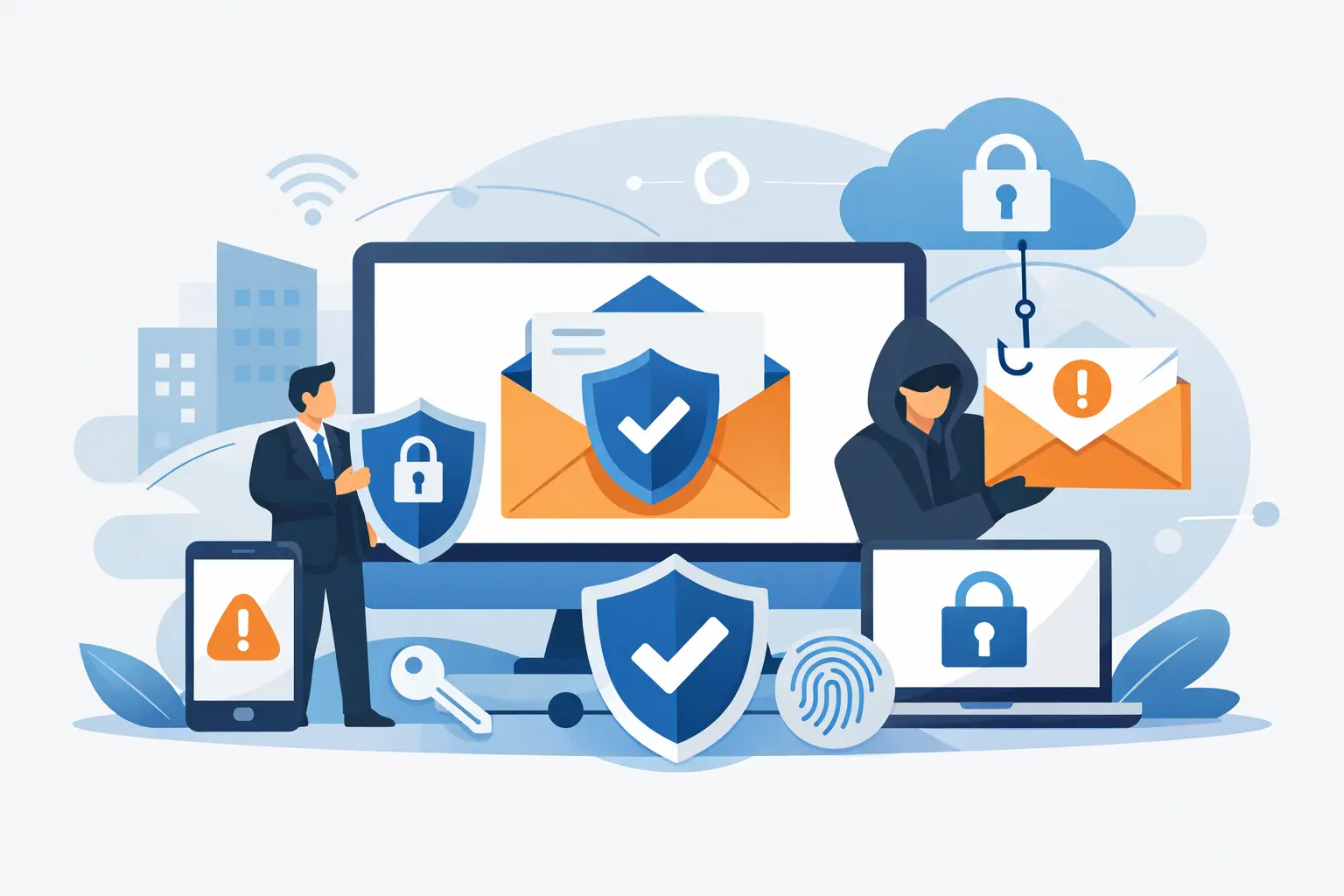
Email remains one of the biggest entry points. A convincing invoice, a fake password reset, or a message that appears to come from a supplier can be enough to compromise an account. Once an attacker gets in, they often move quietly. They look for finance systems, shared folders, saved passwords, and opportunities to escalate access.
Another common problem is fragmentation. One supplier manages phones, another looks after Microsoft 365, someone else installed the firewall, and no one has full responsibility for security across the estate. That can create confusion during an incident, exactly when clarity matters most.
What good cybersecurity for businesses looks like
For SMEs, good security is practical, consistent, and proportionate. It should not make day-to-day work harder than necessary, but it should put firm controls around the areas that matter most.
The basics still carry the greatest value. Multi-factor authentication, timely patching, managed endpoint protection, secure backups, and controlled admin access prevent a large share of common attacks. These are not glamorous measures, but they are effective because they reduce the easiest paths into your systems.
Beyond that, visibility matters. If nobody is reviewing alerts, checking login anomalies, or tracking device health, issues can sit unnoticed for too long. The sooner suspicious activity is identified, the better the chance of containing it before it becomes a wider outage.
Resilience also depends on recovery. Backups should be isolated, recent, and tested. If a server fails or data is encrypted, you need confidence that systems can be restored quickly and correctly. A backup that cannot be recovered under pressure is not much of a backup at all.
Security controls should match business reality
There is always a balance to strike. Too little control leaves you exposed. Too much friction encourages workarounds, which create new risks. For example, very strict login requirements may improve security on paper but frustrate staff if they are not implemented sensibly. Equally, giving everyone broad access because it is convenient makes containment far harder if one account is compromised.
A measured approach works better. Start with the systems your business depends on most, the people with the highest access, and the data that would cause the greatest damage if lost or exposed. That is usually where the most meaningful improvements can be made first.
The role of people, process, and technology
Technology on its own does not deliver security. Businesses need clear processes and informed staff alongside the right tools. If an employee spots a suspicious email, do they know how to report it? If a laptop is lost, is there a defined response? If a leaver departs suddenly, how quickly are accounts disabled and access removed?
These operational details matter because incidents rarely happen in ideal conditions. They happen during busy periods, when key staff are away, or when information is incomplete. Good process reduces hesitation and helps people respond calmly.
Training also has a practical role. Staff do not need to become security specialists, but they should know what suspicious activity looks like and what to do next. Short, regular awareness training is often more effective than occasional heavy sessions that are quickly forgotten.
Leadership sets the standard
Security improves when leadership treats it as part of normal business operations rather than an isolated IT task. That means asking sensible questions. Are backups tested? Who has admin rights? What happens if Microsoft 365 accounts are compromised? How long could we operate without our main systems?
When those questions are asked regularly, security decisions become more grounded. Budget is easier to justify when linked to downtime reduction, customer protection, and operational resilience rather than vague technical benefit.
Managed support can close the gaps
Many SMEs do not have the time or internal resources to manage security properly across endpoints, cloud services, user access, backups, and networks. That is where a managed approach can make a real difference. Instead of reacting after a problem appears, the business has ongoing oversight, maintenance, and support designed to reduce the chance of disruption in the first place.
This matters because cybersecurity for businesses is not a one-off project. New starters join, devices age, software changes, offices move, cloud usage expands, and threats shift. Controls that were adequate two years ago may no longer be enough. Security needs regular attention if it is going to remain effective.
For many firms, there is also value in having one accountable partner across IT support, security, connectivity, communications, and recovery planning. During an incident, speed depends on coordination. If multiple systems are affected, a joined-up response is usually faster and less stressful than trying to manage several suppliers at once.
Where to start if your setup feels unclear
If your current environment feels hard to assess, start by focusing on risk, not products. Identify the systems that are most critical to operations, the places where sensitive data sits, and the single points of failure that could stop the business trading. From there, review who has access, how devices are protected, whether backups have been tested, and how quickly support can respond if something goes wrong.
You do not need perfection on day one. What matters is reducing the most serious exposure first. In many cases, the biggest gains come from straightforward improvements – tightening access, replacing ageing hardware, standardising endpoint protection, and putting proper backup and recovery measures in place.
For Irish SMEs that want protection without building a large in-house IT function, a provider such as Host-It can help turn fragmented systems into a more secure and supportable environment. The real value is not just stronger security controls. It is having the confidence that when staff arrive on Monday morning, the systems they rely on are there, protected, and ready to work.
The best security decision is usually the one that makes your business harder to disrupt and easier to recover, because staying protected is only half the job – staying operational is what really counts.