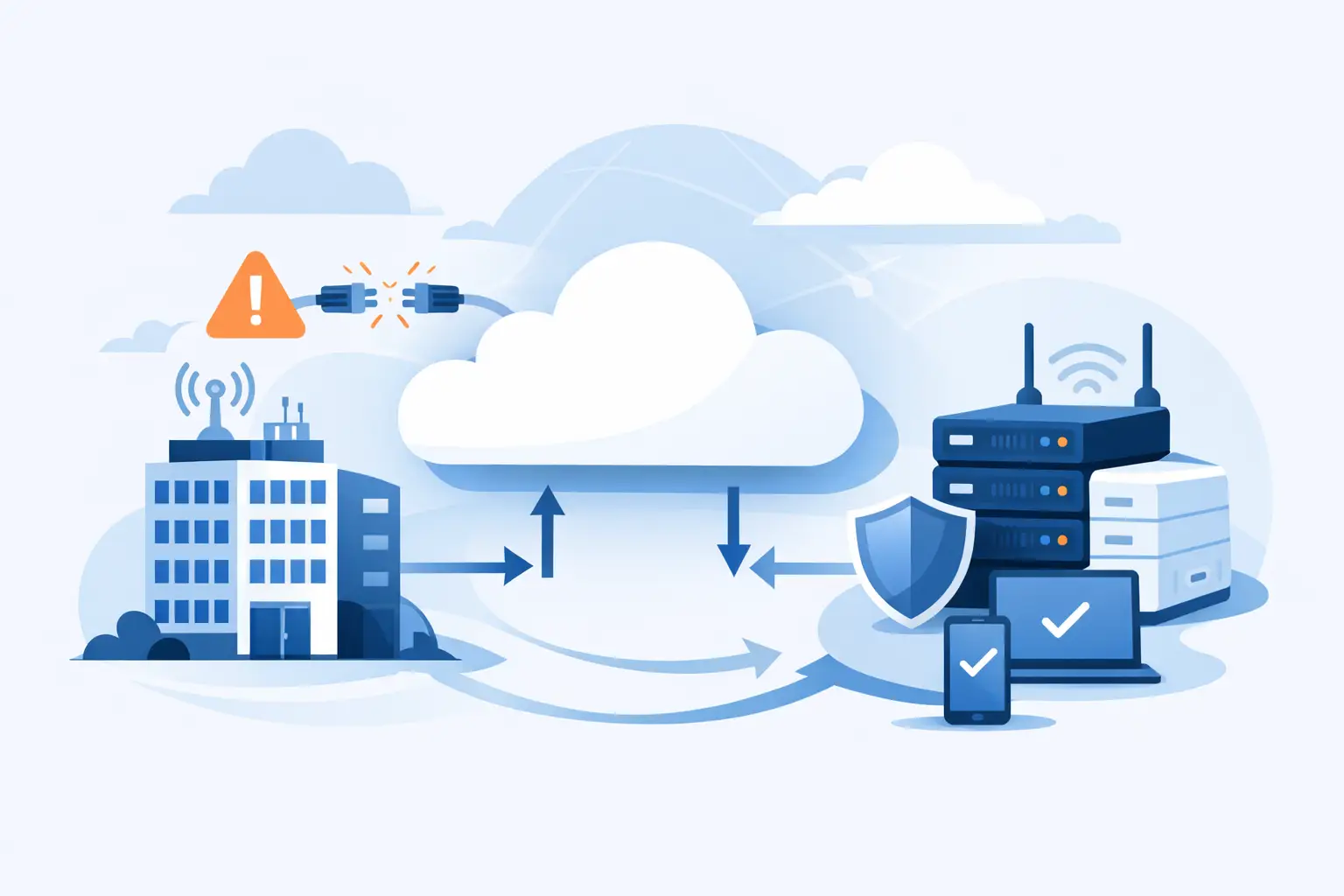

Missed calls rarely look dramatic on a balance sheet, but they have a habit of showing up elsewhere – in delayed sales, frustrated customers, and staff wasting time juggling mobiles, desk phones and patchy call forwarding. A hosted VoIP phone system for business fixes that by moving your phone service into the cloud, giving your team a more flexible, reliable way to handle calls without being tied to ageing on-site equipment.
For many SMEs, the attraction is not just lower telecoms costs. It is control. When your phones, users and call routing can be managed quickly, your business is better placed to handle growth, staff changes, hybrid working and unexpected disruption. That matters whether you run a busy office, a multi-site operation, or a small team that simply needs customers to reach the right person first time.
What a hosted VoIP phone system for business actually does
At its simplest, a hosted VoIP phone system uses your internet connection to make and receive calls. Instead of relying on a traditional PBX in a comms cupboard, the core phone platform is hosted securely off-site by your provider. Your users connect through desk phones, softphone apps on laptops, or mobile apps on company mobiles.
That setup changes more than the way calls travel. It gives you access to features that used to be expensive or difficult to manage, such as auto-attendants, hunt groups, voicemail to email, call recording, business hours routing and simple user changes. For an SME, this can remove a lot of friction from everyday operations.
If somebody moves desk, starts working from home, or joins the business at short notice, you are not waiting for a site visit just to make a basic update. The system can adapt much faster than a legacy phone setup. That is one of the main reasons businesses replace older lines and on-premises PBXs.
Why SMEs are moving away from traditional phone systems
Traditional business telephony often creates hidden costs. Hardware ages, maintenance becomes harder, and simple changes can turn into a project. If your current phone system was installed years ago, it may still technically work while quietly making the business less efficient.
A hosted model is appealing because it shifts the burden away from maintaining physical call infrastructure on your premises. There is less equipment to worry about, fewer single points of failure in the office, and a clearer monthly cost. For businesses already moving services into Microsoft 365, cloud backup or managed IT support, cloud telephony is a natural next step.
There is also the flexibility factor. Many SMEs no longer operate from one fixed location in the same way they did a decade ago. Teams split time between home, office, customer sites and different branches. A phone system that assumes everyone is at one desk from nine to five does not reflect how most businesses now work.
The business case goes beyond cheaper calls
Cost matters, but focusing only on call charges misses the bigger value. A good hosted VoIP phone system for business improves how quickly calls are answered, how professionally calls are routed and how easily staff stay reachable.
That has a direct effect on customer experience. A caller who reaches the right department quickly is more likely to stay on the line. A team member who can answer their office number from a mobile app is less likely to miss an urgent enquiry. Managers who can review call patterns have a better view of staffing pressure and missed opportunities.
It can also support business continuity. If your office loses access due to a power cut, weather event or building issue, calls do not have to stop. They can usually be redirected to mobiles, laptops or another site. For businesses that cannot afford communication downtime, that resilience is often more valuable than any headline saving.
What to look for in a hosted VoIP phone system for business
Not every service is equal, and this is where decision-makers need to look past feature lists. The right system should fit the way your business operates now while allowing room for change.
Call quality is the first test. VoIP depends on your network being set up correctly, with enough bandwidth and the right prioritisation for voice traffic. If a provider talks only about handsets and monthly pricing, but not about connectivity and network readiness, that is a warning sign. A phone platform is only as reliable as the environment supporting it.
Support is just as important. SMEs do not usually want to manage call flows, troubleshoot quality issues and coordinate telecoms changes between multiple suppliers. A service-led provider should be able to advise on setup, user changes, resilience and security as part of an ongoing relationship, not simply install the system and disappear.
You should also consider how the phone system connects with the rest of your operations. For example, if your business uses Teams, CRM software, shared customer service inboxes or multiple office locations, those factors should shape the design. A generic package may be cheaper on paper, but a poor fit can create workarounds that cost more in time and frustration.
Common features that genuinely help
The most useful features are usually the practical ones. Auto-attendants help callers reach the right team without relying on one receptionist to manually transfer every call. Hunt groups make sure calls ring a department rather than a single person. Voicemail to email helps staff respond faster, especially when they are away from their desk.
Mobile and desktop apps are now central rather than optional. They allow staff to present a professional business number wherever they are working, which is particularly useful for hybrid teams, field staff and managers who travel between sites. Call recording can also be valuable, though its use should be governed properly for compliance and training purposes.
Reporting tools can be helpful too, especially for businesses with customer service or sales teams. Seeing missed call volumes, peak call times and answer performance can highlight staffing gaps and process issues that would otherwise go unnoticed.
The trade-offs to understand before you switch
Hosted VoIP is not magic, and it is best to be clear about the trade-offs. The biggest dependency is your internet connection. If connectivity is poor or your internal network is not configured properly, call quality will suffer. That does not mean VoIP is unreliable. It means the surrounding infrastructure has to be taken seriously.
There can also be a change management element. Staff used to old handsets and old habits may need a little support to use apps, presence settings or new call routing properly. The technology can simplify communication, but only if people understand how to use it.
Security should not be ignored either. Any internet-connected service needs proper controls. That includes secure administration, strong credentials, suitable network protection and a provider that treats telephony as part of the wider IT and cyber risk picture. Phone systems are business-critical, and they should be managed that way.
Why one provider often works better than several
A hosted phone system does not sit in isolation. It relies on connectivity, user devices, network performance and support processes. When those elements are managed by different companies with different priorities, fault resolution can become slow and frustrating.
That is why many SMEs prefer to work with one partner that can look at the full picture. If calls are dropping, the issue might be broadband, firewall rules, poor Wi-Fi coverage or handset setup. A joined-up provider can diagnose and resolve those issues more efficiently because they are not treating telephony as a separate island.
For businesses already thinking about resilience, cybersecurity and day-to-day support, this joined-up approach makes practical sense. It reduces supplier complexity and gives you clearer accountability when something affects operations.
When is the right time to change?
Usually before your current system becomes a problem you can no longer ignore. If your business is planning an office move, expanding to another location, supporting more home workers or struggling with an outdated PBX, that is a sensible time to review options. The same applies if your telecoms setup feels fragmented, with mobiles, desk phones and remote workers all operating separately.
A well-planned move to hosted VoIP should not be rushed, but it does not need to be disruptive either. The key is to review your current call flows, user needs, connectivity and continuity requirements first. That way the new system is built around how your business actually works, not around assumptions.
For Irish SMEs, especially those looking for responsive support and joined-up IT management, a provider such as Host-It can make that transition far more straightforward by aligning telephony with the wider needs of security, connectivity and business continuity.
The best phone system is not the one with the longest feature list. It is the one that helps your team answer faster, work from anywhere and keep the business reachable when conditions are less than perfect. If your current setup makes that harder rather than easier, it may be time for a change.