
If your phones still rely on a fixed line in the comms cupboard, the real question is not whether it works today. It is whether it still fits how your business operates. The debate around VoIP vs traditional phone systems matters because calls are only one part of the picture now. Your phone setup affects remote working, customer response times, office moves, resilience during outages and the cost of supporting old infrastructure.
For many SMEs, the phone system was put in place years ago and simply left alone. That is understandable. If people can make and receive calls, it rarely feels urgent. But once a business starts adding hybrid staff, opening another site, tightening budgets or reviewing continuity risks, the limits of a traditional system become much harder to ignore.
VoIP vs traditional phone systems: what is the difference?
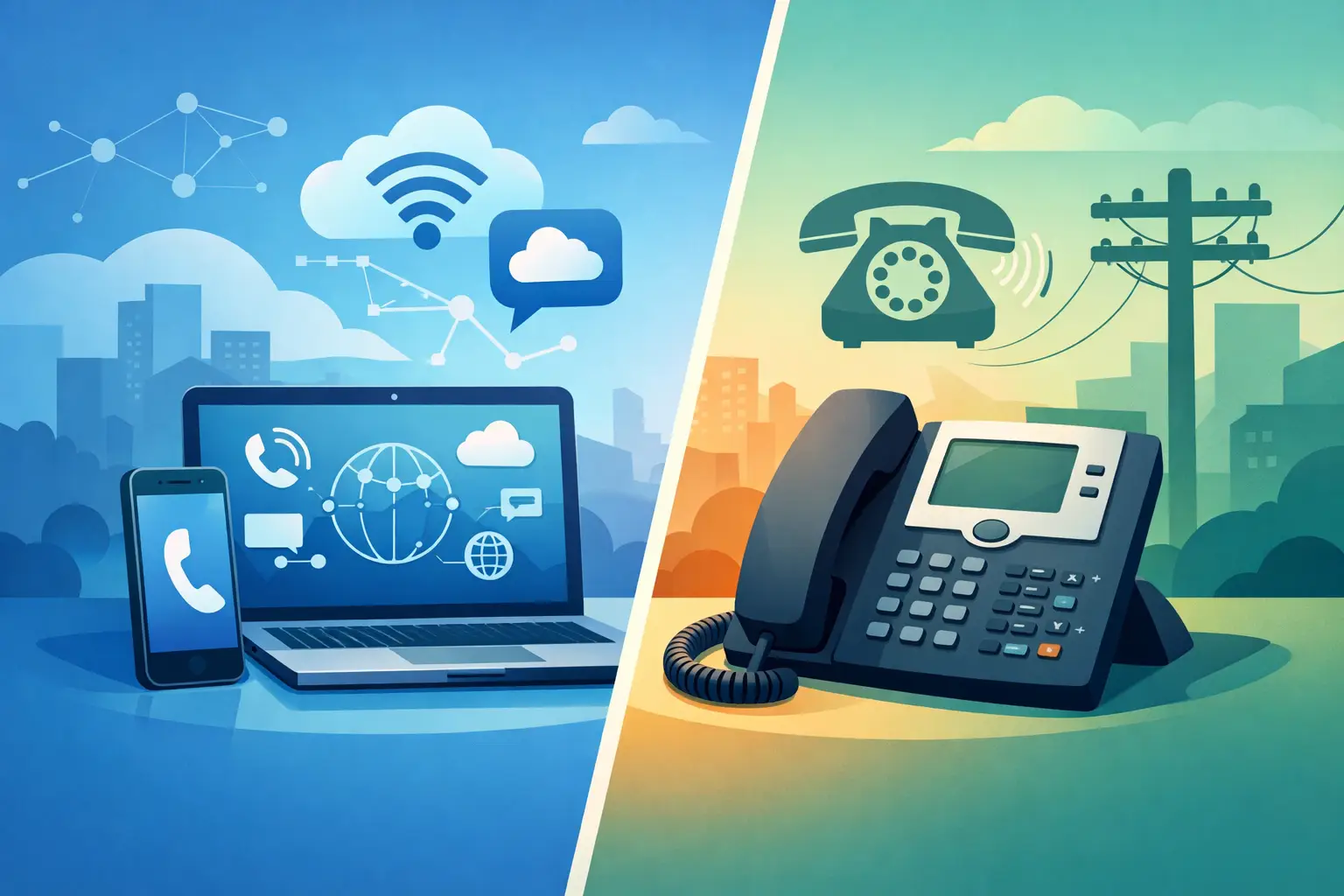
A traditional phone system usually runs over the Public Switched Telephone Network or through on-site PBX hardware connected to physical phone lines. In simple terms, it depends on dedicated cabling, fixed handsets and office-based infrastructure.
VoIP, or Voice over Internet Protocol, carries calls over your internet connection instead. That means users can make and receive calls through desk phones, laptops, mobiles or softphone apps, depending on how the system is set up. The core difference is not just the technology underneath. It is the flexibility of the whole service.
For a smaller business, that distinction has practical consequences. A legacy phone system tends to tie communication to one location. VoIP makes it easier to tie communication to the person, wherever they are working.
Where traditional phone systems still make sense
Traditional systems are not obsolete in every scenario. Some businesses still prefer them because they are familiar, stable in a fixed office setup and straightforward for teams that work entirely on-site. If you have a single location, minimal call routing needs and no interest in changing how staff work, a conventional system may continue to do the job.
There is also a perception that fixed-line phones are more reliable, particularly where broadband quality is poor. In some premises, that concern is valid. Voice quality on VoIP depends heavily on network performance, so if your connection is unreliable and your internal network is not properly managed, call issues can follow.
That said, familiarity is not the same as suitability. Many traditional systems continue in place simply because replacing them feels disruptive, not because they remain the best option.
Why VoIP appeals to growing SMEs
VoIP has become the default choice for many businesses because it fits modern operations far better. If your team works across home, office and mobile locations, a cloud-based phone system gives you a level of flexibility that older setups struggle to match.
A call can ring on a desk phone, a laptop app and a mobile at the same time. Staff can keep the same business number without being tied to one desk. New users can be added quickly without major cabling work. If your business changes premises, the phone system can move with far less disruption.
For decision-makers, the bigger advantage is usually control. VoIP platforms often include call reporting, auto-attendants, voicemail to email, hunt groups and easy management through an online portal. Those features help smaller teams present themselves more professionally without needing enterprise-scale telecoms infrastructure.
Cost is not just about the monthly bill
When comparing VoIP vs traditional phone systems, cost often becomes the headline issue. It should not be the only one.
Traditional systems may appear cheaper if the hardware is already installed and paid for. But older systems often come with hidden costs in maintenance, engineer callouts, limited scalability and the challenge of sourcing parts or support. Adding extensions or changing office layouts can also become more expensive than expected.
VoIP generally shifts spending towards a predictable monthly operational cost. That can make budgeting easier, especially for SMEs trying to avoid sudden capital outlay. It is also usually more cost-effective when you need to add users, support multiple sites or enable remote staff.
Still, VoIP is not automatically the cheaper option in every case. If your internet connectivity needs to be upgraded, or if your business requires new handsets, network improvements or managed support to ensure call quality, those costs need to be factored in properly. The right comparison looks at total cost over time, not just line rental versus licence fees.
Reliability depends on more than the phone system itself
This is where many buying decisions go wrong. Businesses sometimes compare a well-established legacy phone line with a poorly planned VoIP rollout and assume the old model is safer. In reality, reliability depends on how the wider environment is managed.
A traditional system may keep running during an internet outage, but it can still leave you exposed in other ways. If the office loses power, if hardware fails on-site, or if staff cannot get to the building, your ability to answer calls may disappear quickly.
A well-configured VoIP service can improve resilience rather than reduce it. Calls can be rerouted to mobiles, other users or another office. Cloud-hosted systems remove some of the dependence on a single physical box in one location. With the right connectivity, quality of service settings and failover planning, VoIP can be a strong part of a business continuity strategy.
That is the real test. Not whether the system works on a normal Tuesday morning, but whether your business can still respond when something goes wrong.
Security needs to be part of the decision
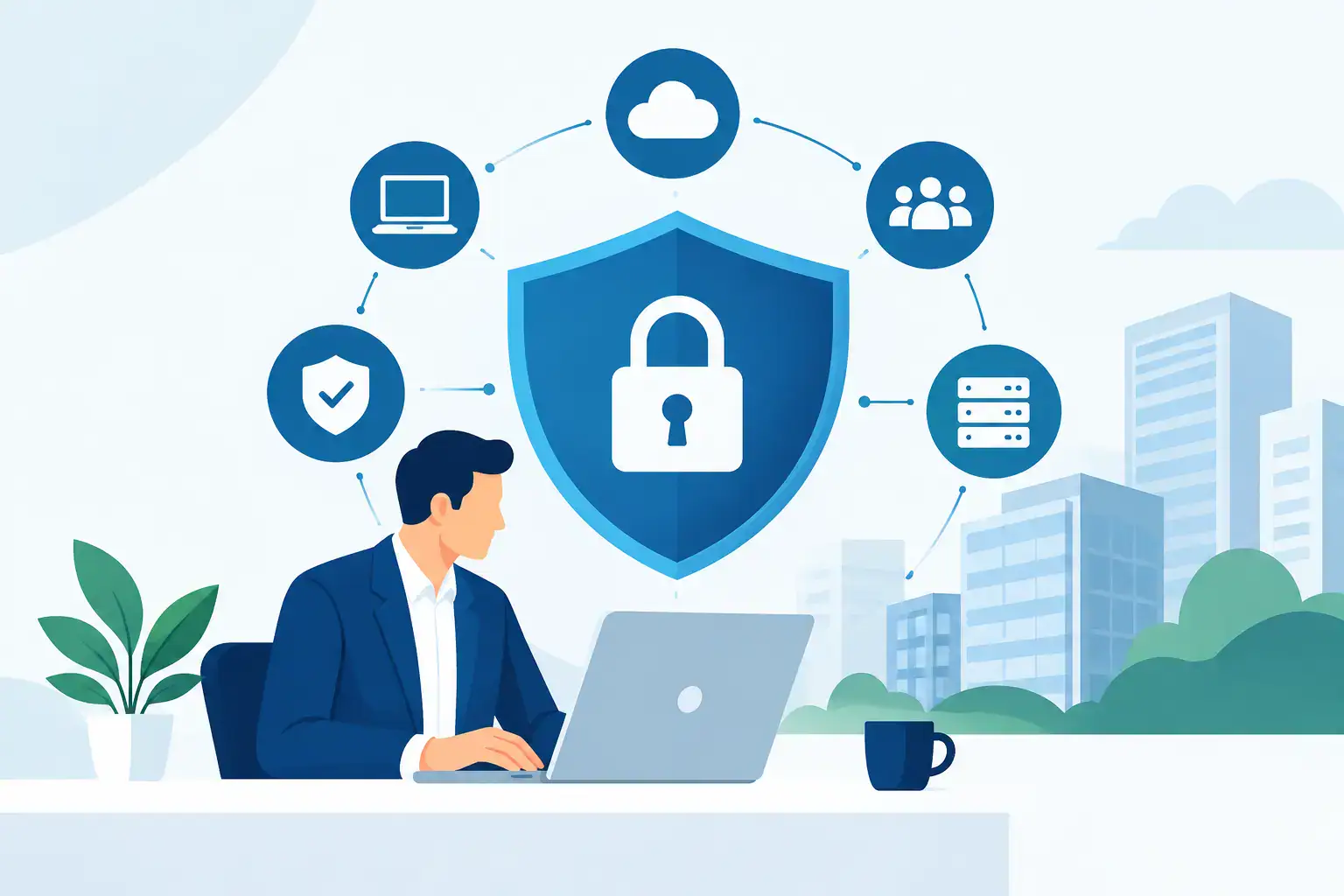
Phone systems are often treated as separate from IT and security, which is a mistake. A modern communication platform sits inside your wider technology environment, and it needs to be managed accordingly.
Traditional systems carry their own risks, especially when ageing hardware is poorly maintained or difficult to monitor. VoIP introduces different considerations, including network security, account protection, fraud prevention and secure configuration. The answer is not to avoid modern systems. It is to deploy them properly.
For SMEs without in-house telecoms or security specialists, the safest route is usually to treat telephony as part of a managed IT strategy rather than a standalone purchase. When phones, connectivity and cybersecurity are handled together, there is far less chance of gaps appearing between suppliers.
VoIP vs traditional phone systems for hybrid working
If your business now works in a hybrid model, the comparison becomes much clearer. Traditional systems were designed around a central office. VoIP is better suited to distributed teams.
That affects more than convenience. It changes how quickly staff can answer calls, how easily departments can collaborate and how visible customer communication becomes across the business. A receptionist can transfer calls to someone working from home without the caller noticing any difference. Sales and support staff can remain reachable on their business number while out of the office. Managers can review call activity without chasing paper-based or site-specific records.
For SMEs trying to stay responsive without adding unnecessary overhead, that flexibility can directly support productivity.
What to consider before making the switch
The right answer depends on your current setup, internet reliability, growth plans and appetite for change. If your business relies heavily on voice communication, the priority should be a proper assessment rather than a rushed replacement.
Start with how your team actually uses the phones. Consider whether staff need to work across locations, whether your current system limits customer service, and whether business continuity has become a bigger concern. Then look at the condition of your network. VoIP performs best when the underlying connectivity and internal infrastructure are fit for purpose.
It is also worth thinking beyond the phone system itself. If you are already reviewing cloud services, security, office relocation or general IT support, telephony should be part of that conversation. Bringing those decisions together often leads to a more reliable result than treating each service in isolation.
For businesses in Dublin that want one provider to look at communications alongside infrastructure, resilience and support, Host-It takes that joined-up approach because the goal is not simply to install a phone system. It is to reduce disruption and keep the business working.
Which option is right for your business?
If your organisation is stable, fully office-based and operating comfortably on existing hardware, a traditional system may still be adequate for now. But if you need flexibility, easier scaling, stronger continuity options and better visibility over how calls are handled, VoIP is usually the better long-term fit.
The key is to avoid treating the choice as purely technical. This is an operational decision. The phone system you choose influences customer experience, staff mobility, resilience during disruption and the ongoing cost of keeping your business connected.
A dependable phone service should support the way your business works now, not the way it worked five or ten years ago. That is usually the clearest sign that it is time to reassess.