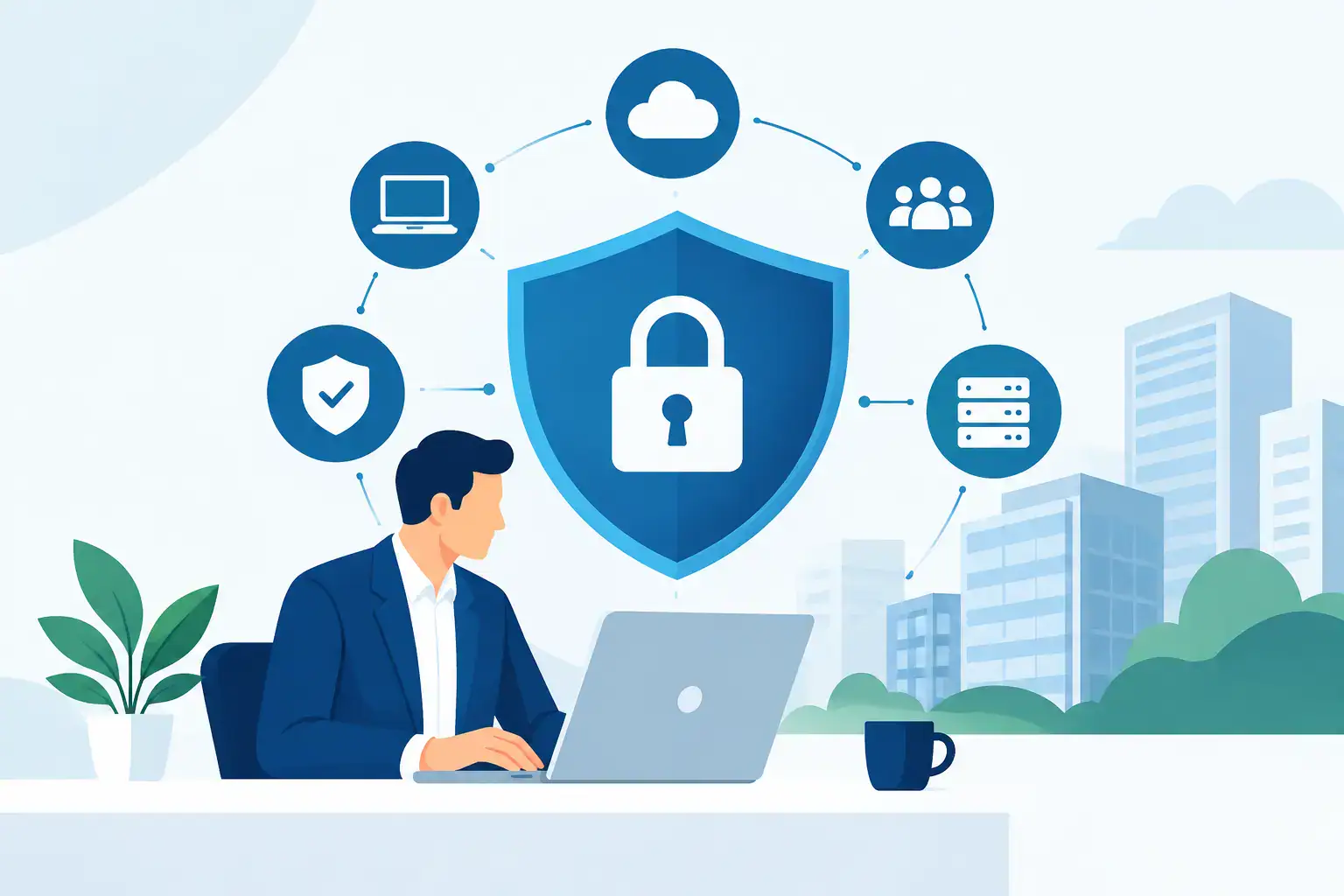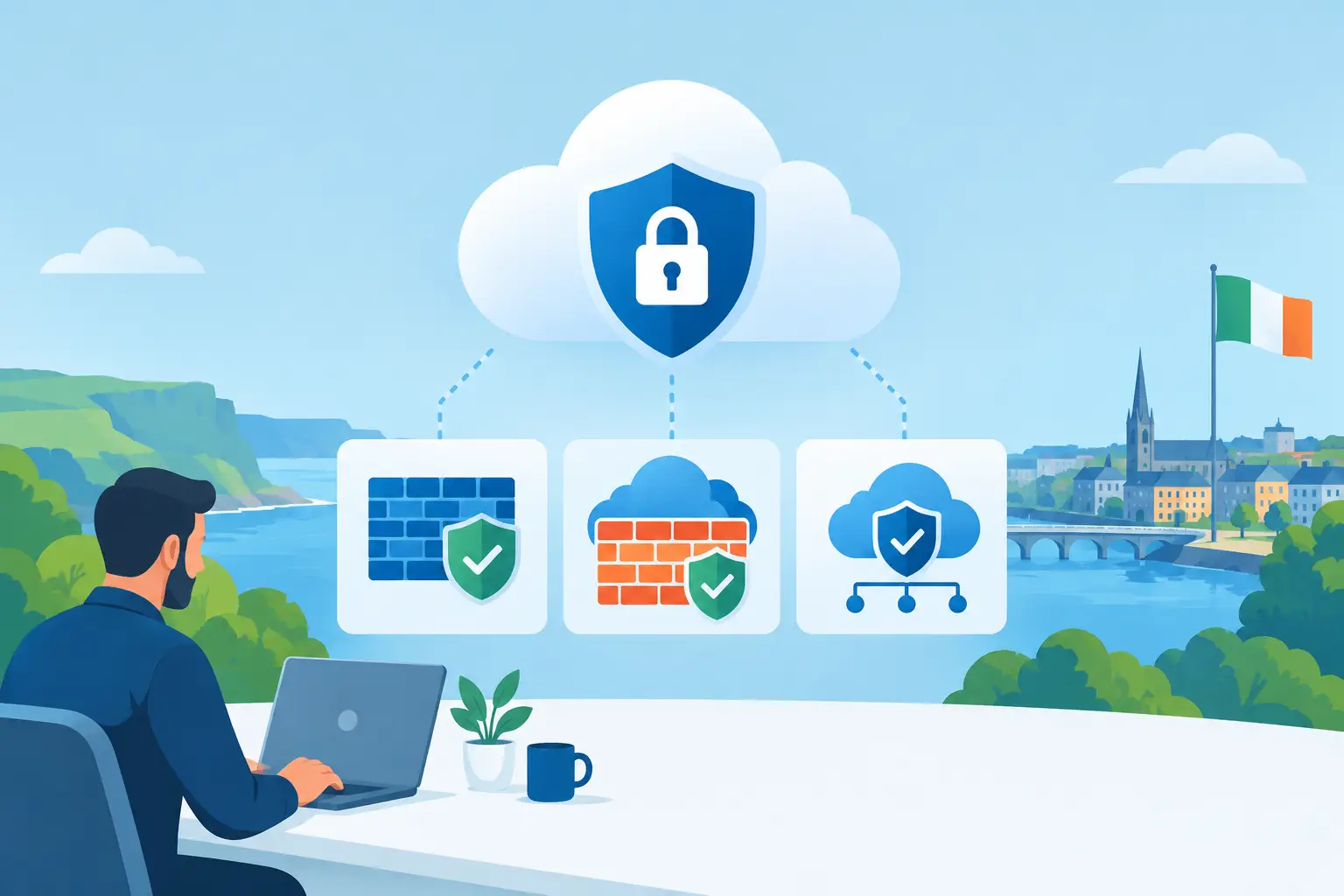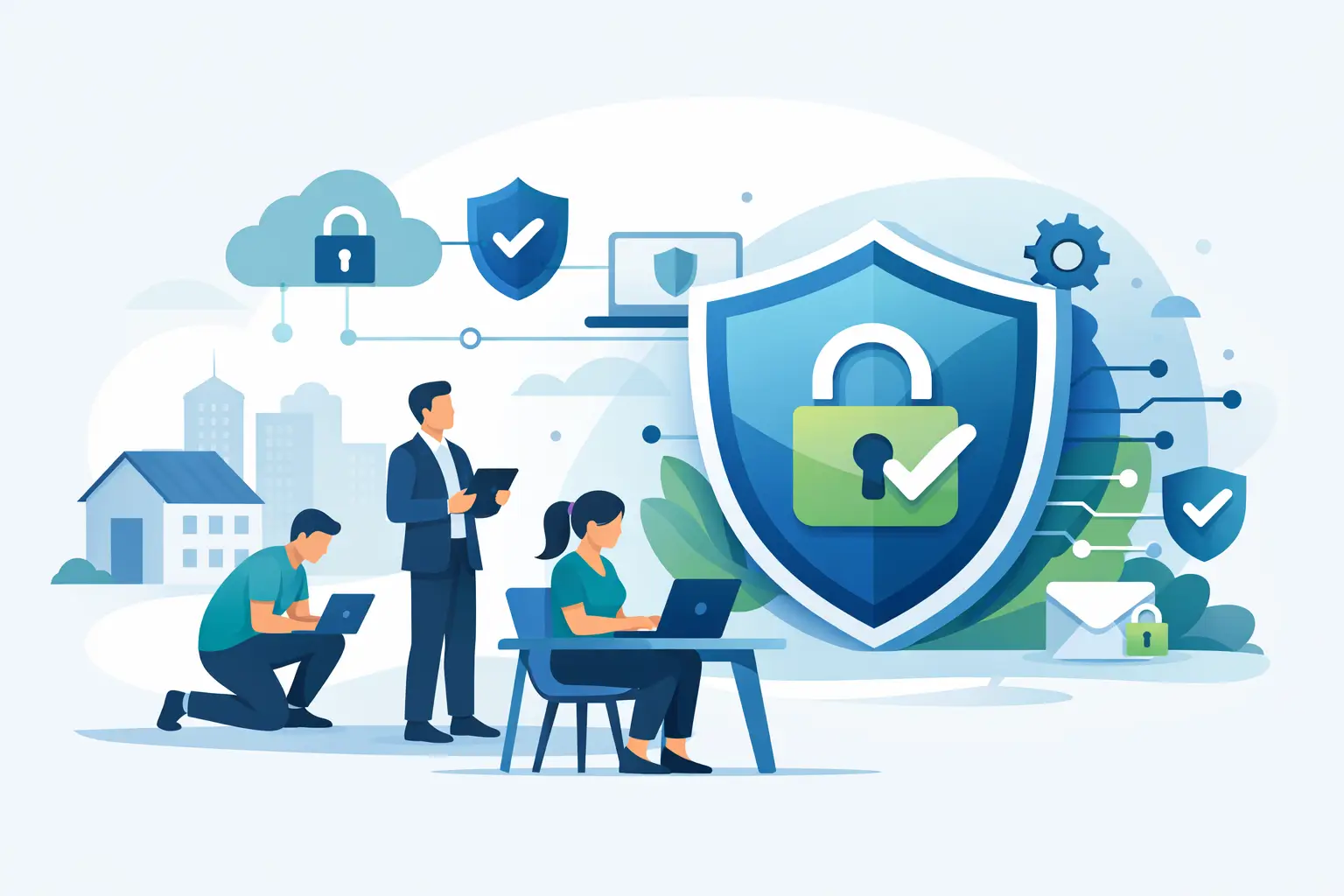

A supplier questionnaire, a tender requirement or a customer security review can bring an urgent question to the surface: what does Cyber Essentials cover? For an SME, the answer is reassuringly practical. It focuses on the everyday technical controls that prevent many common cyber attacks from becoming a costly interruption to business.
Cyber Essentials is a UK Government-backed certification scheme designed to help organisations put sensible baseline protections in place. It does not require an enterprise-sized security team or a complete rebuild of your IT estate. It does require clear visibility of the devices, accounts, software and cloud services your business relies on – and evidence that they are managed safely.
What does Cyber Essentials cover?
Cyber Essentials covers five core areas of technical security: boundary firewalls and internet gateways, secure configuration, user access control, malware protection and security update management. Together, these controls address familiar attack routes such as unpatched software, weak account security, unsafe device settings and unauthorised access.
The scheme is deliberately focused. It is not a full cyber risk assessment, a guarantee against every breach or a substitute for a wider business continuity plan. Areas such as staff awareness training, backup strategy, incident response and physical security still matter greatly, but they are not the five headline technical controls assessed under Cyber Essentials.
That distinction is useful. Certification gives your business a firm security baseline and a recognised way to demonstrate it to customers. Good ongoing IT management builds on that baseline, keeping protection effective as staff, devices and threats change.
The five controls explained
Boundary firewalls and internet gateways
A firewall controls the traffic moving between your systems and the internet. It can be a dedicated appliance in the office, a feature within a business router, or a cloud-based control protecting remote users and services.
Cyber Essentials expects businesses to configure these gateways securely rather than simply leave the default settings in place. Administrative access should be restricted, unnecessary services should not be exposed to the internet, and configuration changes should be controlled. If a device can be reached from the internet without a legitimate business reason, it represents an avoidable opportunity for an attacker.
For SMEs with hybrid working, this control is wider than the office broadband connection. Home workers, remote access tools, cloud platforms and mobile devices all need to be considered in the way people access company resources.
Secure configuration
New laptops, phones, servers and applications often arrive with convenience features enabled. Default administrator accounts, unnecessary software, broad permissions and factory passwords can all create risk if they are not addressed before a device enters normal use.
Secure configuration means setting up technology deliberately. Businesses should remove or disable unused applications and accounts, change default passwords, use appropriate lock-screen settings, and ensure users do not have more access than they need. It also means establishing a repeatable process, so a replacement laptop is protected just as carefully as the first one.
This is where an accurate asset register pays off. If no one knows which devices are active, which operating systems they run or who owns them, it is difficult to prove that configuration is consistent. A basic inventory of computers, mobiles, servers, network equipment and key cloud services is a strong starting point.
User access control
Many cyber incidents begin with a compromised account, not a dramatic technical failure. Cyber Essentials therefore places close attention on how user accounts are created, protected and removed.
Each person should have their own account rather than sharing a login with colleagues. Access must be limited to what that person needs for their role, while administrator privileges should be granted only where there is a clear operational reason. When someone changes roles or leaves the business, their access should be reviewed promptly.
Strong passwords remain part of the picture, but multi-factor authentication is increasingly essential. A stolen password is much less useful to an attacker if a second verification step is required. MFA should be prioritised for email, cloud storage, finance systems, remote access and administrator accounts, as these are frequent targets.
The practical balance matters. Giving every employee administrator rights may feel quicker when software needs installing, but it substantially increases the impact of a phishing email or malicious download. A managed process for software requests and elevated access is safer without making staff wait unnecessarily.
Malware protection
Malware protection covers the measures used to prevent, detect and contain malicious software, including ransomware. For many businesses, this includes centrally managed anti-malware or endpoint protection on laptops, desktops and servers.
The emphasis is not simply on installing a product and forgetting about it. Protection must be active, kept up to date and configured to scan or monitor devices effectively. Staff also need sensible controls around downloads, attachments and applications, particularly when devices are used outside the office.
There is no single product that makes a business immune to ransomware. Endpoint protection works best alongside restricted user privileges, secure email controls, timely patching and backups that are protected from alteration. Cyber Essentials addresses a key part of that picture, but resilience depends on the surrounding controls too.
Security update management
Attackers routinely exploit known weaknesses in operating systems, browsers, business applications and network equipment. Security updates close those weaknesses, which makes patch management one of the most valuable controls an SME can maintain.
Cyber Essentials requires supported software and the prompt application of security updates, particularly for vulnerabilities rated critical or high. Organisations should normally apply these updates within 14 days of release. Automatic updates can make this easier, but they still need oversight, especially for systems that cannot tolerate unexpected change.
Older software can complicate certification. A legacy accounting package, an unsupported server or a specialist device may be critical to day-to-day operations but no longer receive security fixes. In some cases, replacement is the right answer. In others, the business may need carefully designed compensating measures while a migration is planned. Ignoring the issue is rarely a workable long-term option.
What is included in the certification scope?
The scope of Cyber Essentials is just as important as the five controls. It should cover the technology used by the organisation to deliver its normal business, including company-owned devices, servers, network equipment, cloud services and remotely used systems where relevant.
This can be challenging for businesses that have grown quickly or adopted cloud applications department by department. A team might use Microsoft 365 centrally, alongside separate project management, payroll, CRM and file-sharing platforms. The certification process often reveals where ownership and access management have become fragmented.
Bring-your-own-device arrangements need particular care. If personal mobile phones or laptops can access company email, files or business applications, they cannot be ignored. The appropriate approach depends on the level of access and data involved. Some businesses use mobile device management; others limit access through browser-based tools and enforce MFA. The goal is to apply proportionate control without creating unnecessary friction for staff.
Cyber Essentials and Cyber Essentials Plus
Cyber Essentials has two levels. The standard Cyber Essentials certification is based on a self-assessment questionnaire, which is reviewed by an independent certification body. It is suitable for organisations that need to show they have the required controls and can answer detailed questions honestly about their environment.
Cyber Essentials Plus adds an independent technical assessment. An assessor tests a sample of devices and systems, including vulnerability scanning and checks of the controls declared in the questionnaire. It provides additional assurance for customers, supply chains and tenders where self-assessment alone may not be enough.
Neither route should be treated as a box-ticking exercise. If the answers are based on assumptions rather than a proper review of devices, accounts and policies, gaps usually surface later – often during a customer audit, an incident or the Plus assessment itself. A short readiness assessment before applying can save time and avoid last-minute disruption.
Preparing your business without creating disruption
Start by identifying the systems that keep the business operating: user devices, email, cloud storage, line-of-business software, internet connections, servers and remote access. Confirm who administers each one and whether it is supported, patched and protected by MFA where appropriate.
Next, review privileged accounts. Remove old users, eliminate shared administrator logins where possible and make sure access is reviewed when staff leave. Then look at patching reports and endpoint protection status. These two checks often identify the most immediate issues.
Finally, document what you find. Cyber Essentials is easier to maintain when there is a clear record of your technology estate, security responsibilities and regular review process. This also improves operational resilience when a key staff member is absent or an urgent problem needs to be resolved quickly.
For businesses with limited internal IT capacity, an experienced managed IT partner can turn those checks into a realistic plan, prioritising the changes that reduce risk without interrupting productive work. Host-It supports Dublin SMEs with the practical security management, device oversight and continuity planning that make certification easier to achieve and maintain.
Cyber Essentials should be treated as a working standard, not a certificate to file away. Review it when you introduce new software, move systems to the cloud, onboard staff or change how people work. That steady attention is what helps keep a manageable security requirement from becoming an avoidable business disruption.
We help clients prepare for Cyber Essentials as part of our cyber security services.