
A business moves its files to Microsoft 365, adds cloud backups, gives staff remote access, and assumes security is largely handled. Then a phishing email lands, an account is compromised, and the disruption spreads far beyond one cloud app. That is where the cybersecurity vs cloud security question stops being academic and starts affecting day-to-day operations.
For most SMEs, the issue is not choosing one or the other. It is understanding what each covers, where the gaps sit, and who is responsible for protecting the business. If that line is unclear, risks tend to sit unnoticed until there is downtime, data loss, or a compliance problem to fix under pressure.
Cybersecurity vs cloud security: what is the difference?
Cybersecurity is the broader discipline. It covers the protection of systems, devices, networks, users, data, and business operations from digital threats. That includes email security, endpoint protection, firewalls, access controls, patching, backups, threat detection, user awareness, and incident response.
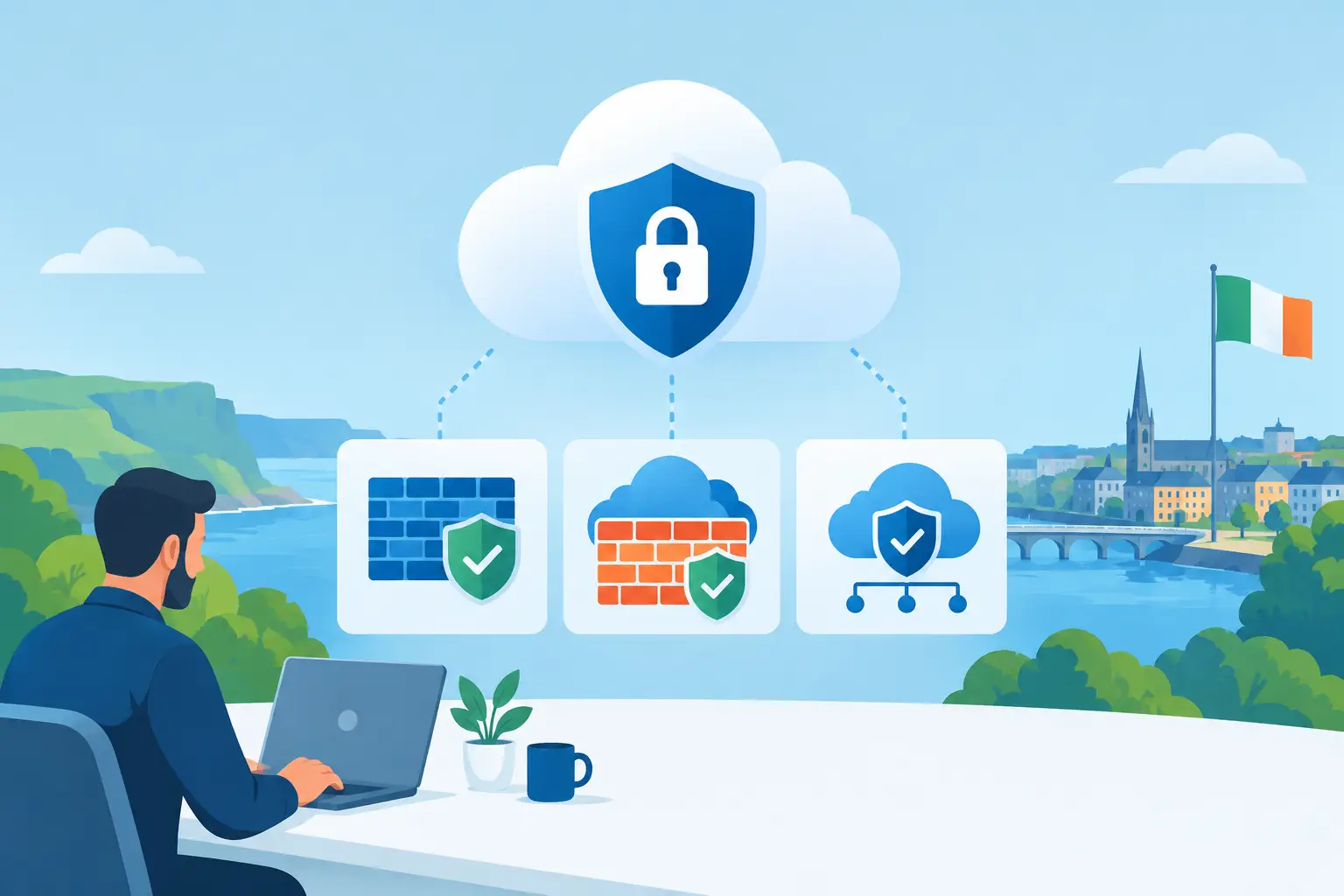
Cloud security is a subset within that wider picture. It focuses specifically on protecting cloud-based systems, applications, data, identities, and configurations. If your business uses Microsoft 365, Azure, Google Workspace, cloud-hosted line-of-business software, or off-site backup platforms, cloud security is part of how those services are secured and managed.
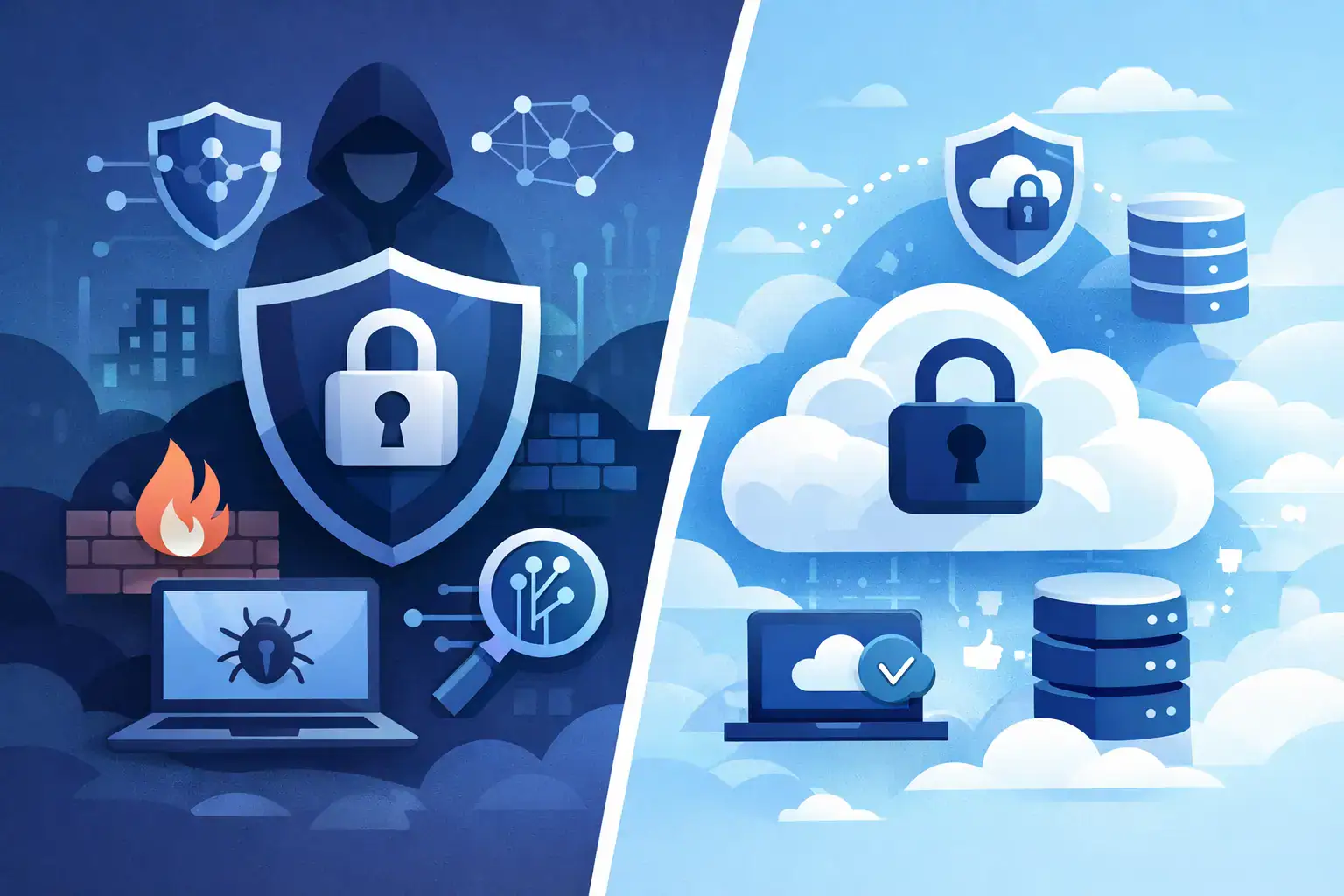
A simple way to think about it is this: cybersecurity protects the business as a whole, while cloud security protects the cloud environments the business relies on. The two overlap heavily, but they are not interchangeable.
Why the distinction matters for SMEs
For a smaller business, this can sound like splitting hairs. In practice, it affects budgets, responsibilities, and risk. If leadership believes moving to the cloud removes the need for active security management, important controls are often missed. Multi-factor authentication may not be enforced, user permissions may be too broad, old accounts may remain active, and backup assumptions may prove inaccurate when files need to be restored quickly.
The cloud can reduce certain risks tied to ageing on-site infrastructure. It can improve resilience, support hybrid working, and simplify access to business systems. But it does not remove the need for cybersecurity. It changes where the risks sit and how they need to be managed.
That is especially relevant for SMEs without a large internal IT team. Security is no longer just about a server in the comms room. It now includes user identities, device access, cloud app settings, data sharing rules, and the ability to recover when something goes wrong.
What cybersecurity covers beyond the cloud
Cybersecurity reaches into every part of the working environment. It includes laptops, mobile phones, office networks, remote access, email systems, telephony platforms, printers, business applications, and employee behaviour. A ransomware incident, for example, might begin with a compromised password or malicious attachment, but the impact can extend across local devices, shared drives, cloud storage, and customer communications.
That broader scope matters because many attacks are not limited to one platform. A threat actor might steal credentials through phishing, log into a cloud account, deploy malicious rules in email, and then use that access to target finance processes or exfiltrate data. The initial weakness may be a user account, but the business impact is operational.
Cybersecurity therefore includes prevention, monitoring, response, and recovery. It is not just a set of tools. It is an ongoing management function designed to keep the business running safely.
What cloud security focuses on
Cloud security deals with the specific risks introduced by cloud services and remote access. That includes identity and access management, secure configuration, conditional access policies, data loss prevention, encryption, logging, workload protection, and visibility across SaaS and cloud infrastructure.
One of the biggest cloud security issues for SMEs is misconfiguration. Businesses often adopt cloud platforms quickly, but permissions, sharing settings, retention policies, and device controls are left at default or only partially configured. The service is live, staff can work, and everything appears fine until sensitive data is overshared or an account is abused.
Another common issue is misunderstanding the shared responsibility model. A cloud provider secures its underlying platform, but the customer is still responsible for how accounts, devices, data, and access are managed within that environment. If a user reuses passwords, if MFA is not enforced, or if confidential files are accessible to the wrong people, that usually sits with the customer rather than the provider.
Cybersecurity vs cloud security in the real world
In most businesses, the risks are mixed together. A member of staff works from home on a laptop, signs into Microsoft 365, opens email, accesses a cloud CRM, joins Teams calls, and saves files to SharePoint. Is that cybersecurity or cloud security? The honest answer is both.
The endpoint must be patched and protected. The account must be secured with strong authentication. The cloud service must be configured correctly. Data should be backed up appropriately. Access should reflect the user’s role. Suspicious activity should be detected quickly. If any one of those pieces is weak, the whole chain is more vulnerable.
This is why trying to separate the two too rigidly can be unhelpful. The distinction is useful for understanding scope, but from an operational point of view, they need to work together.
Where businesses often get caught out
The most common mistake is assuming cloud adoption equals full protection. It does not. Moving systems off-site can improve availability and reduce hardware overhead, but it does not automatically deliver a complete security strategy.
Another issue is fragmented ownership. One supplier handles Microsoft 365, another manages internet connectivity, a third looks after backups, and no one has a clear view of overall risk. That leaves gaps between services, particularly during incidents, office moves, staff changes, or rapid growth.
There is also a tendency to focus on visible technology while underestimating process. Password policies, leavers and joiners procedures, access reviews, and recovery testing are less glamorous than new platforms, but they are often what determines whether a security event becomes a brief issue or a serious outage.
How to approach both without overcomplicating it
For SMEs, the right approach is usually practical rather than theoretical. Start by identifying the systems the business depends on most: email, files, finance platforms, customer records, phones, remote access, and backups. Then look at how those systems are protected across users, devices, cloud platforms, and recovery plans.
That means asking straightforward questions. Who has access to what, and why? Is MFA enforced everywhere it should be? Are laptops encrypted and updated? Are cloud backups separate from the live environment? Can access be removed quickly when someone leaves? Would the business know if an account was compromised? How long would it take to recover key operations?
The answers usually show whether the business has a joined-up security posture or a patchwork of tools and assumptions.
For many organisations, this is where managed support adds real value. Instead of treating cloud services, devices, backups, and security controls as separate projects, they are managed as part of the same operational picture. That reduces blind spots and makes it easier to respond when something unexpected happens.
Which matters more?
Neither is more important in isolation. If your business relies heavily on cloud systems, cloud security deserves serious attention. But it still sits within the wider need for cybersecurity. A secure Microsoft 365 tenant will not help much if endpoints are unprotected, staff are poorly trained, or backup and recovery planning is weak.
Equally, strong general cybersecurity controls are not enough if cloud environments are loosely configured and identities are poorly managed. The answer depends on your setup, but for most SMEs the sensible priority is not choosing between them. It is making sure both are covered in a coordinated way.
That is particularly true where business continuity matters. Security is not only about stopping attacks. It is about limiting disruption, maintaining access to critical systems, and keeping staff productive when conditions are less than ideal. That is the standard many businesses need, even if they do not describe it in technical terms.
A useful way to think about the issue is this: cybersecurity is the full protection strategy, and cloud security is one of the most important parts of delivering it in a modern business. When the two are aligned, systems are easier to manage, risks are clearer, and recovery is far less chaotic. For SMEs that want fewer surprises and more stability, that clarity is worth having before the next incident tests it.