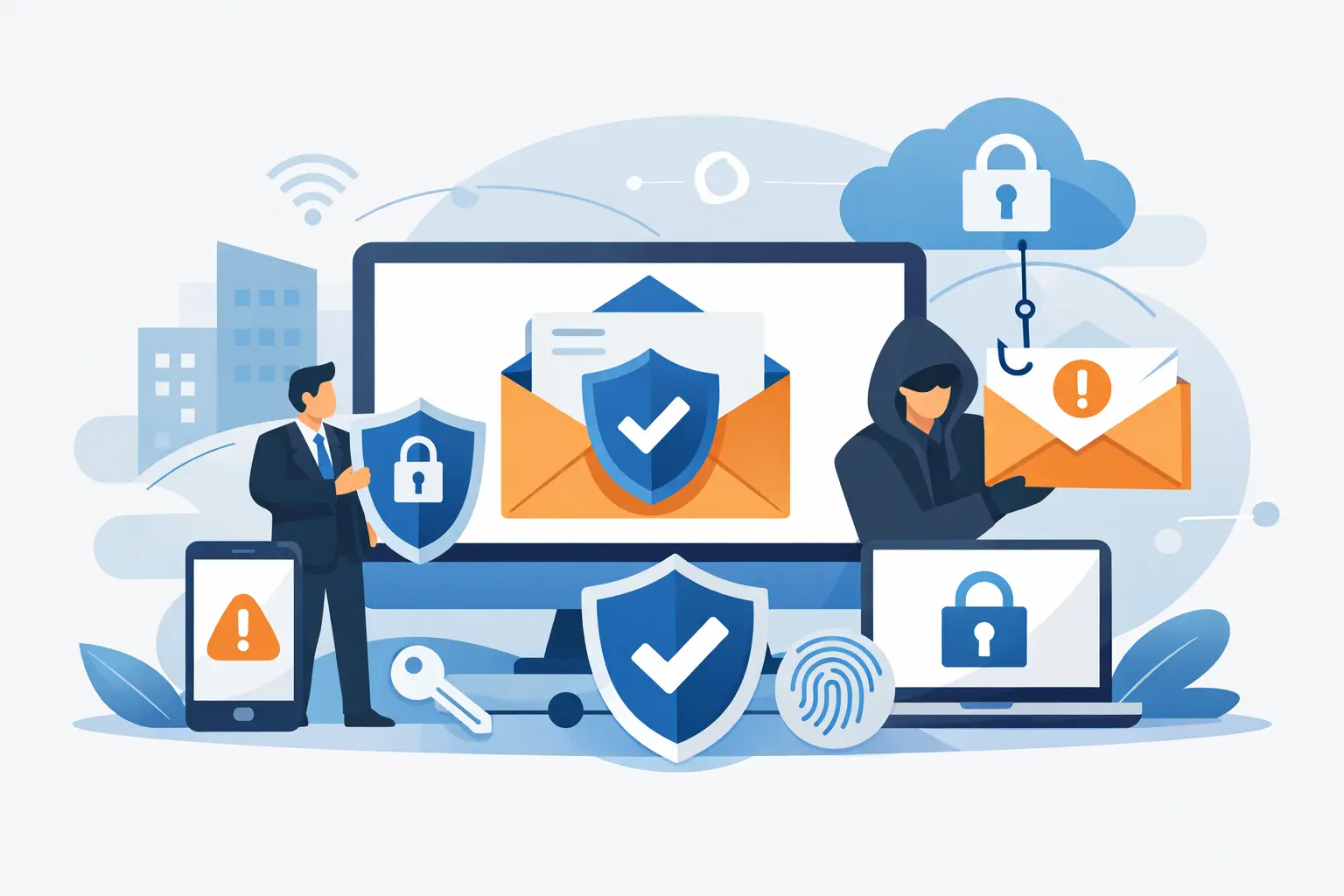

A phishing email lands in Accounts at 9.12am. By 9.18am, a staff member has entered credentials into a fake Microsoft 365 page. By 10am, an attacker is reading mailbox contents, resetting passwords and searching for invoices, payroll files and customer records. If you are asking what is information security in cyber security, this is the practical answer: it is the part of security focused on keeping business information protected, accurate and available when your team needs it.
For most SMEs, information is the business. It sits in emails, cloud platforms, shared folders, finance systems, CRM records, contracts and backups. Cyber security is the wider discipline of defending systems, devices and networks from attack. Information security sits within that wider discipline and concentrates on the data itself – who can access it, how it is handled, where it is stored and whether it can be trusted.
What is information security in cyber security?
The simplest definition is this: information security is the practice of protecting information from unauthorised access, alteration, loss or destruction. In cyber security, that means using policies, controls and day-to-day processes to reduce the risk of digital data being exposed, changed or made unavailable.
That sounds straightforward, but in a working business it reaches into almost everything. It affects how staff log in, how files are shared, how laptops are encrypted, how backups are tested, how suppliers connect to your systems and how quickly you can respond when something goes wrong. It is not limited to stopping hackers. It also covers accidental deletion, mis-sent emails, weak permissions, poor offboarding and outdated systems that expose sensitive data.
A useful way to think about it is that cyber security often focuses on threats, while information security focuses on the value of the information being protected. The two are closely linked, but they are not identical.
The three principles behind information security
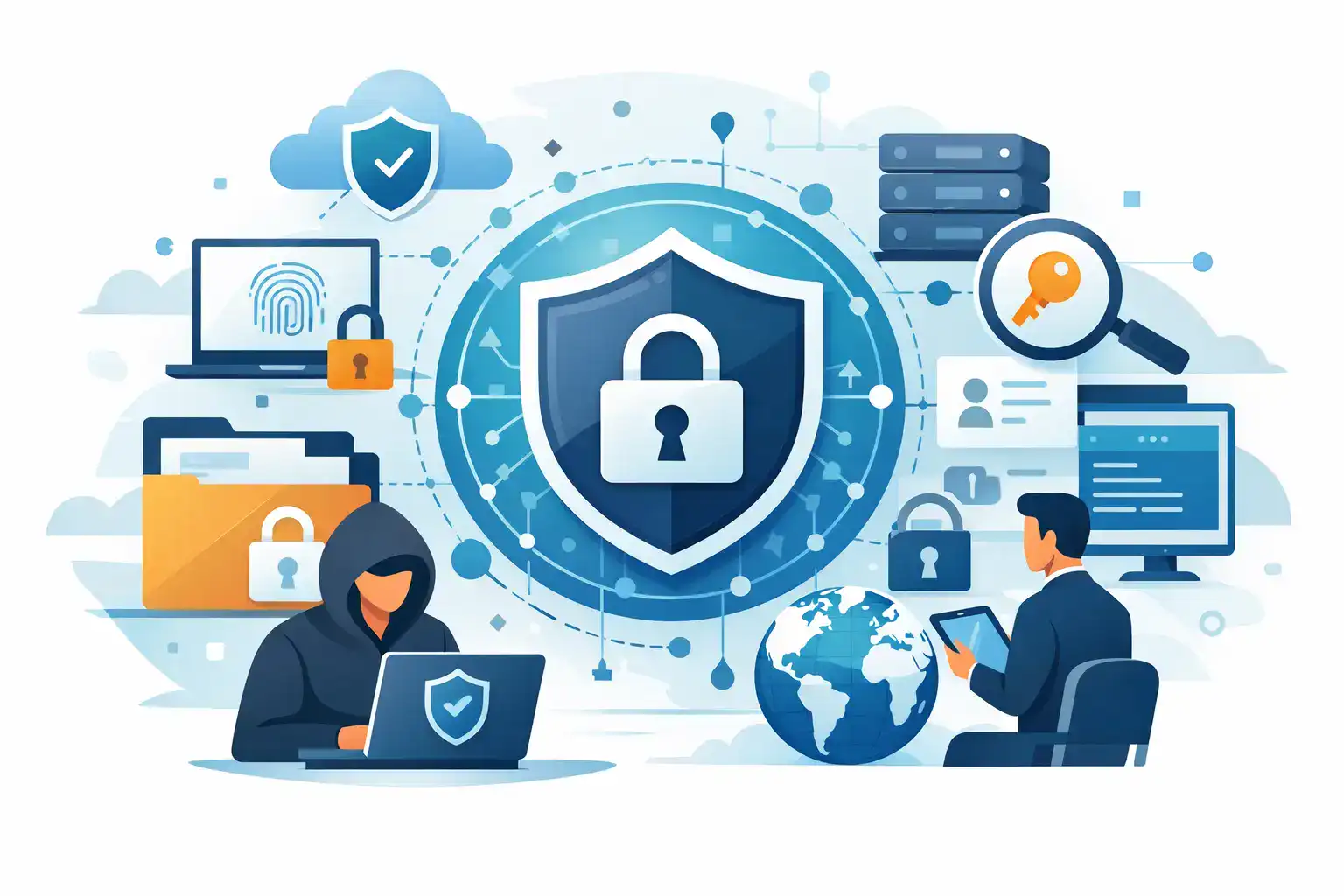
Most information security programmes are built around three core principles: confidentiality, integrity and availability.
Confidentiality means only the right people can see the information. Payroll records, customer files, commercial contracts and HR documents should not be visible to everyone in the business just because they sit in a shared folder. This is where access controls, multi-factor authentication and user permissions matter.
Integrity means the information stays accurate and trustworthy. If an invoice is altered, a spreadsheet is corrupted or a cyber criminal changes bank details before payment is made, the issue is not just access – it is whether the data can still be relied on. Version control, change tracking and approval processes all support integrity.
Availability means information is accessible when needed. A file locked by ransomware, a failed server, an expired licence or an unusable backup can all stop staff doing their jobs. Availability is why backup, disaster recovery, system monitoring and patching are part of information security, not separate from it.
If one of those three fails, the business feels it quickly. You may face downtime, financial loss, regulatory pressure or reputational damage. In SMEs, the cost is often operational before it is legal. Work simply stops.
Why information security matters more than many SMEs realise
Many smaller businesses assume attackers only target larger firms with bigger budgets and more headline value. In practice, SMEs are often targeted because they are easier to breach. Security controls may be inconsistent, user permissions too broad, backup routines untested and old devices still in service well beyond their safe life.
The issue is not only cyber crime. Information security also protects against ordinary business risk. A member of staff leaves and still has access to cloud accounts. A laptop is lost during travel. A supplier is given too much access to a shared system. A critical folder is deleted by mistake. These are common incidents, and they can be just as disruptive as a malicious attack.
For decision-makers, the real value of information security is business continuity. Good controls reduce the chance of a serious incident and limit the damage if one occurs. That means less downtime, less confusion during a response, and a much better chance of keeping customer service and internal operations running.
What information security looks like in practice
Good information security is not one product and it is not a one-off exercise. It is a set of working controls that match the way your business operates.
At a basic level, that includes secure logins, multi-factor authentication, strong password policies, encryption on laptops and mobile devices, and sensible user permissions. It also includes reliable backups, patch management and email protection, because information is only safe if the systems around it are managed properly.
Beyond the basics, there is a people and process layer. Staff need to know how to spot suspicious emails, handle sensitive documents and report issues quickly. New starters should receive the right access on day one, and leavers should lose it immediately. Shared drives and Microsoft 365 environments should be reviewed regularly so access reflects actual job roles rather than historic convenience.
There is also a governance layer. Businesses need to know what data they hold, where it lives and which information is most sensitive. A company handling payment details, employee records or confidential client information has different priorities from one mainly working with public documents. Information security should reflect that reality. More control is not always better if it slows the business down unnecessarily. The right level depends on the risk.
Information security vs cyber security: what is the difference?
This is where confusion often starts. Cyber security is the broader discipline concerned with protecting digital systems, networks, devices and users from cyber threats. Information security is narrower in one sense, because it focuses on the protection of information. But it also cuts across technical and non-technical areas.
For example, a firewall is a cyber security control. So is endpoint detection. Information security includes those controls where they protect data, but it also includes document classification, access policies, secure disposal, backup retention and staff handling procedures.
So when someone asks what is information security in cyber security, the best answer is that information security is the data protection discipline inside the wider cyber security picture. It is concerned with confidentiality, integrity and availability, whether the threat comes from hackers, human error, poor process or system failure.
Common weak points in SME environments
In smaller organisations, information security problems often come from practical gaps rather than dramatic technical failures. One of the biggest is excessive access. People keep permissions they no longer need, shared inboxes are open to too many users, and old accounts remain active long after roles change.
Another weak point is inconsistent device management. If some laptops are encrypted, some are not, and updates depend on users remembering to install them, protection becomes uneven. Attackers look for that inconsistency.
Backups are another area where assumptions cause trouble. Having a backup is not the same as having a usable recovery plan. If no one has tested restoration, the business may only discover a problem during an incident, when time matters most.
Email remains a major risk too. Many attacks still begin with phishing, fake invoices or account compromise. Technical controls help, but staff awareness and clear reporting routes are just as important.
How to improve information security without overcomplicating it
The strongest improvements usually come from getting the basics right and keeping them consistent. Start by identifying your most important information – financial data, customer records, contracts, HR files, email and cloud accounts. Then review who has access, how that access is protected and whether the data can be recovered if it is lost.
From there, focus on controls that make a real operational difference. Multi-factor authentication, secure backups, device encryption, patching, managed endpoint protection and sensible user permissions are high-value steps for most SMEs. Staff training should be regular and practical, not a tick-box exercise once a year.
It also helps to work from a plan rather than a collection of isolated tools. Security products can be useful, but without ownership and oversight they often leave gaps. This is why many businesses choose a managed IT and cyber security partner. The aim is not only to install defences, but to monitor them, maintain them and adapt them as the business changes.
For Irish SMEs especially, this matters during periods of growth, office moves, cloud migration or supplier change. Each of those moments can introduce new risk if access, backup and system controls are not reviewed properly.
Information security is really about trust
Every business depends on trust. Customers trust you with their details. Staff trust the systems they use every day. Directors trust that finance data is accurate, available and protected. Information security supports that trust by making sure the right information is available to the right people at the right time – and to nobody else.
That does not mean eliminating all risk. No business can do that. It means reducing avoidable risk, spotting weaknesses early and having the support in place to respond quickly when something goes wrong. For SMEs, that is often the difference between a manageable incident and a damaging interruption.
If your systems, data and users are central to how your business runs, information security is not an optional technical layer. It is part of keeping the business stable, productive and ready for the next working day.