
A suspicious login, an encrypted file server, or a misdirected email can turn into a business-critical incident within minutes. Understanding what happens after data breach is discovered helps your business act decisively, protect customers and staff, and reduce avoidable downtime. The priority is not to assign blame. It is to contain the damage, establish the facts and keep essential operations moving.
For small and medium-sized businesses, the effects are rarely limited to the affected device. A compromised email account may expose invoices, client records and supplier conversations. Ransomware can stop access to shared files, cloud services or phone systems. The strength of your response depends on preparation, but the first few hours still matter enormously.
What happens after a data breach is identified?
A data breach is any incident where personal, confidential or business information is accessed, disclosed, altered, lost or destroyed without authorisation. It may be caused by a cyber attack, human error, a lost device, a weak password or a supplier issue.
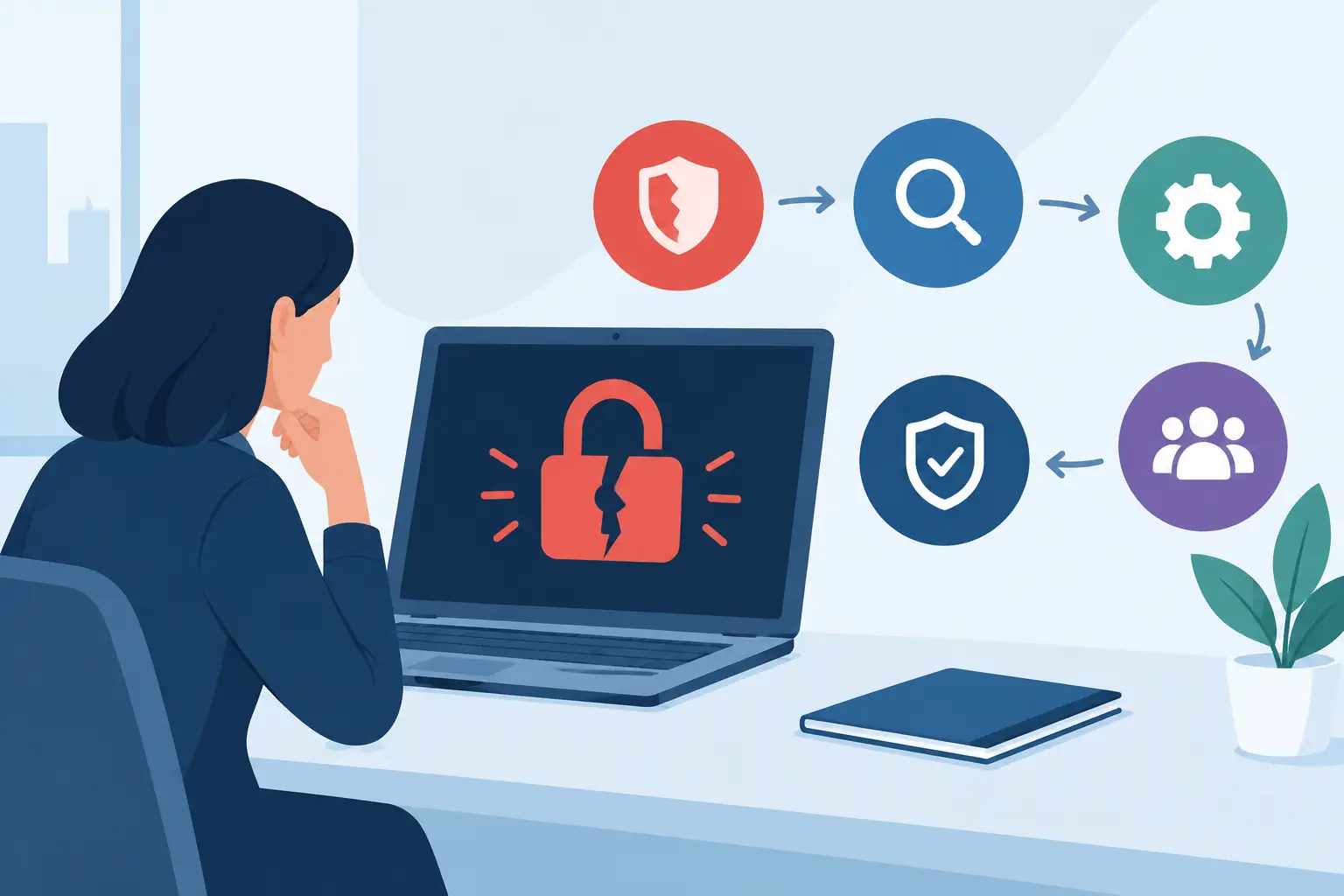
Once an incident is reported or detected, a capable response follows a practical sequence: contain the threat, preserve evidence, investigate the scope, restore services safely, meet notification duties and improve defences. These stages can overlap. You may need to restore a critical service while technical specialists are still determining how an attacker got in.
1. Containment begins straight away
The initial aim is to stop the incident spreading without accidentally destroying evidence or taking more systems offline than necessary. This can mean isolating an affected laptop from the network, disabling a compromised user account, resetting credentials, blocking suspicious access, or temporarily limiting remote connectivity.
There is a judgement call here. Switching everything off may feel safest, but it can interrupt operations, remove useful forensic information and make recovery harder. Equally, leaving a suspected compromised system connected can give an attacker time to move through the network. Your IT support partner should make proportionate decisions based on the systems involved, the signs of compromise and the immediate business risk.
Staff need clear instructions during this period. They should know who to report concerns to, avoid deleting suspicious emails or files, and not communicate externally about the incident unless authorised. A single, consistent internal message prevents rumours and reduces the chance of well-meaning actions making matters worse.
2. The investigation establishes what was affected
Containment is only the beginning. The next task is to establish what happened, when it started, which accounts and systems were involved, and whether information was taken, changed or made unavailable.
Technical teams review security alerts, sign-in records, endpoint activity, email rules, firewall logs and backup status. They may look for signs such as unusual administrator activity, unfamiliar forwarding rules, large data transfers, new software, disabled security tools or access from unexpected locations.
This work matters because recovery should address the root cause, not merely remove the visible symptom. For example, rebuilding a laptop will not resolve an incident if the attacker still has access through a stolen Microsoft 365 password, an unpatched server or a supplier account.
Keep an incident record from the first report onwards. Note the time of discovery, actions taken, people involved, affected services and key decisions. This gives leadership a reliable picture of progress and supports any insurance claim, regulatory assessment or customer communication that follows.
Reporting a data breach under GDPR
If the breach involves personal data, your organisation must assess its obligations under the UK GDPR or, for Irish businesses, the EU GDPR. A breach does not automatically require a report to a regulator, but it must be assessed promptly and documented.
In Ireland, organisations may need to notify the Data Protection Commission within 72 hours of becoming aware of a personal data breach where it is likely to create a risk to individuals’ rights and freedoms. If there is a high risk to affected people, such as a realistic prospect of identity fraud, financial loss or serious confidentiality harm, those individuals may also need to be informed without undue delay.
The details depend on the data involved and the potential impact. A lost encrypted device may pose a very different risk from an exposed spreadsheet containing customer names, bank details and identification documents. Seek legal or data protection advice where required, particularly before making a formal notification. Do not delay technical containment while that assessment is taking place.
Your cyber insurance provider may also have specific reporting requirements. Contact them early, before appointing external forensic or recovery suppliers, if your policy requires it. Failing to follow the policy process can complicate a claim at the point you most need support.
Communicate with clarity, not guesswork
Customers, suppliers and employees will reasonably want answers if an incident affects them. The right communication is factual, timely and useful. It should explain what happened as far as it is known, what information may be involved, what the business has done, and what practical actions recipients should take.
Avoid making promises before the investigation is complete. It is better to state that the enquiry is ongoing than to give a confident explanation that later proves wrong. At the same time, silence can damage trust. A designated incident lead, supported by IT, management and legal or compliance advisers, should agree the messaging and keep it updated as facts emerge.
Recover systems without reintroducing the threat
The pressure to get everyone working again is understandable. However, restoring systems too quickly can reintroduce malware, reinstate a compromised account or overwrite evidence needed to understand the attack.
A safe recovery usually starts with verified clean backups, rebuilt or remediated devices, patched software and reset credentials. Privileged accounts deserve particular attention because they can provide broad access across your environment. Multi-factor authentication should be enabled or strengthened before normal access resumes, not postponed until after the crisis.
Recovery is also a business continuity exercise. Agree which services come first based on operational impact. For one organisation, it may be customer emails and cloud files. For another, it may be accounts software, order processing, VoIP telephony or a line-of-business system. A clear order prevents teams from competing for limited technical resources.
Good backups are essential, but they are not a guarantee on their own. They need to be protected from deletion or encryption, monitored, retained appropriately and tested through real restore exercises. The key question is not simply whether a backup ran last night. It is whether you can restore the right data, to the right system, within a timescale the business can tolerate.
The days after a breach: improve, test and prepare
Once critical systems are stable, the incident should become a practical source of improvement. Hold a short, structured review while the detail is fresh. Identify how the breach was detected, where controls worked, where delays occurred and which changes will reduce the chance or impact of a repeat incident.
The response may involve technical changes such as patching, endpoint protection, email filtering, network segmentation, access controls and secure backup improvements. It may also require better processes: clearer approval for payment changes, stronger supplier verification, a documented joiner and leaver process, or staff training focused on the specific tactics used.
Training should not be treated as a box-ticking exercise. Many breaches start with a convincing phishing email or a fraudulent request that appears to come from a director or trusted supplier. Staff who know how to pause, verify and report unusual requests are a valuable layer of protection.
Finally, test the incident response plan. A plan that exists only as a document is unlikely to perform well under pressure. Run a realistic scenario with decision-makers: a compromised email account, unavailable files or suspected ransomware. Confirm who has authority to isolate systems, contact insurers, notify customers and approve recovery priorities.
A breach is disruptive, but it does not have to define your business. With reliable backups, clear responsibilities and responsive technical support, SMEs can contain incidents faster and return to normal operations with greater confidence. Host-It helps Dublin businesses build that preparedness before an urgent call makes it necessary.