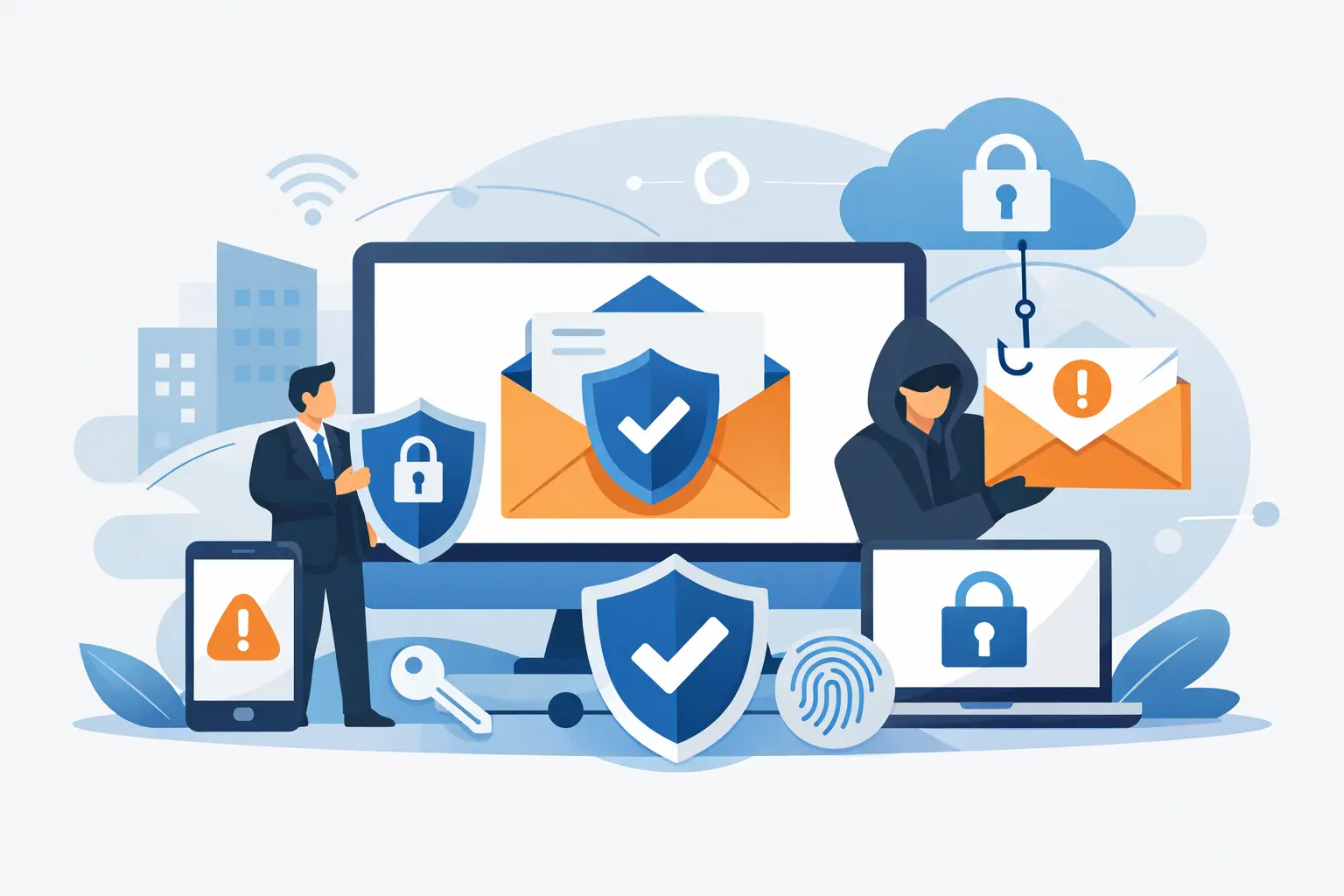

A finance manager gets an urgent message from the managing director asking for a supplier payment to be sent before close of business. The wording looks right. The signature block matches. The request feels plausible because the sender is travelling and wants it handled quickly. That is exactly why business email compromise prevention matters – these attacks succeed by looking ordinary.
For SMEs, business email compromise is one of the most damaging cyber risks because it targets people, process and trust rather than just technology. It can lead to fraudulent payments, stolen credentials, payroll diversion, exposure of sensitive data and long periods of disruption while accounts are secured and transactions are investigated. Unlike noisier attacks, it often starts quietly with one convincing email and one rushed decision.
Why business email compromise prevention needs a business process, not just a spam filter
Many organisations assume email security tools will catch this type of threat automatically. Good filtering does help, but business email compromise often slips through because there may be no malware attached and no obvious malicious link. The attacker may simply impersonate a senior person, a supplier or a member of staff and ask for money, account details or confidential information.
That means prevention depends on a wider set of controls. The technical layer matters, but so do payment approval rules, user awareness, access protection and a clear way for staff to challenge unusual requests. If any one of those areas is weak, the attacker has room to work.
For smaller businesses, that is where the risk often grows. Teams are busy, departments overlap and one person may handle accounts, purchasing and supplier changes. Efficient working is good for productivity, but it can also remove the friction that stops fraud. A fast-moving business still needs deliberate checks around anything that moves money or exposes data.
The most common BEC tactics affecting SMEs
The classic example is CEO fraud. An attacker spoofs or compromises an executive account and asks for an urgent transfer. Sometimes the message is brief by design. A short request can feel more authentic than an overexplained one, especially if it arrives during a busy period.
Supplier impersonation is another frequent tactic. The attacker poses as a trusted vendor and requests an update to bank details before the next invoice is paid. If that change is accepted by email alone, the next payment can go straight to the criminal.
There is also payroll and HR fraud, where staff receive messages asking them to change salary details or share tax and identity documents. In other cases, attackers compromise a mailbox and monitor conversations until they find the right moment to intervene in a real payment thread.
The trade-off here is simple. The more open and responsive your business is by email, the more important verification becomes. Email remains essential, but it cannot be treated as proof of identity on its own.
Business email compromise prevention starts with identity and access controls
The first priority is to make it harder for attackers to access genuine accounts. Multi-factor authentication should be enforced across email and Microsoft 365 environments, especially for directors, finance users and administrators. Passwords alone are not enough, particularly where credentials may already have been exposed through phishing or reuse.
Conditional access, sign-in risk checks and alerts for unusual login behaviour add another layer. If a user account suddenly signs in from an unfamiliar location or device, the business should know quickly. Early detection can stop mailbox rules, forwarding changes and impersonation before damage spreads.
Mailbox auditing matters as well. Attackers who gain access often create hidden forwarding rules or delete messages to avoid detection. If no one is watching for those changes, a compromise can sit unnoticed for days or weeks.
These controls are effective, but they need proper setup and regular review. Turning on MFA is not the end of the job if legacy protocols remain active or privileged accounts are poorly managed. Prevention works best when the whole identity stack is looked at together.
Payment controls are one of the strongest defences
A surprising number of fraud attempts succeed because businesses allow bank detail changes or urgent payments to be approved from a single email. That is a process issue, and it is fixable.
Any request to change supplier bank details should be verified through a known phone number or a separate communication channel. Not the number in the email signature, and not a reply to the same thread. The same applies to unusual payment requests, especially those marked urgent, confidential or outside normal approval routes.
Dual authorisation is another practical control. If one person raises a payment and another approves it, the attacker has to defeat more than one step. It does add a little administration, but for most SMEs that is a worthwhile trade when compared with the cost of a fraudulent transfer.
The right level of process depends on the size of the business. A smaller firm may not need complex financial controls, but it does need a clear rule that no change to bank details or payment destination is actioned from email alone.
Staff training should focus on judgement, not scare tactics
Most people know suspicious emails exist. What they need is confidence in what to do next. Effective awareness training for business email compromise prevention should focus on realistic scenarios: a director asking for urgency, a supplier chasing an invoice, a colleague requesting documents or a Microsoft 365 prompt that looks genuine.
Staff should know the warning signs, but they should also know that even a polished email can be fraudulent. Overreliance on obvious spelling mistakes and poor formatting is a problem because modern attacks are often clean and convincing.
More importantly, teams need permission to slow things down. If an accounts assistant feels they cannot question a request from senior management, the attacker has already gained an advantage. A healthy security culture allows staff to verify first and act second.
Short, repeated training usually works better than one annual session. People remember practical checks they use every week. Simulated phishing can help too, provided it is used to coach rather than catch people out.
Email authentication helps protect your domain and reputation
If attackers can spoof your company domain, customers and suppliers may receive fraudulent messages that appear to come from your business. That creates both security and reputational risk.
SPF, DKIM and DMARC are the key controls here. They help receiving email systems verify whether messages sent from your domain are legitimate. When configured properly, they reduce successful impersonation and improve visibility into who is sending email on your behalf.
This is one of those areas where details matter. A partial or misconfigured setup can create gaps, and some businesses are reluctant to enforce stricter policies because they worry about blocking valid messages. That concern is understandable, especially where older systems or third-party platforms send mail on the company’s behalf. The answer is not to avoid enforcement entirely, but to review sending sources properly and phase the policy in with care.
What to do if you suspect an attack
Speed matters. If a user reports a suspicious payment request, a mailbox compromise or an unusual login alert, the response should start immediately. Reset credentials, revoke active sessions, review mailbox rules, check for forwarding changes and confirm whether any payments or data disclosures took place.
If money has been transferred, contact the bank at once. Recovery is never guaranteed, but delays reduce the chance of stopping funds. If supplier details were changed, notify affected contacts using verified channels. If sensitive personal data may have been exposed, assess whether regulatory reporting is required.
This is where having an IT support partner helps. Incidents involving email, identity, devices and business continuity rarely stay contained in one system. A coordinated response limits downtime and reduces confusion when decisions need to be made quickly.
Prevention works best when someone owns it
The biggest weakness in many SMEs is not a lack of concern. It is fragmented responsibility. Finance assumes IT is handling email security. IT assumes finance owns payment controls. Leadership assumes the existing process is good enough because nothing bad has happened yet.
Business email compromise prevention needs a named owner and a joined-up plan. That does not mean building an enterprise security department. It means deciding who is responsible for policy, who approves changes, who reviews risks and who staff contact when something looks wrong.
For many businesses, the practical approach is to combine managed IT support, security monitoring and user guidance under one accountable partner. That makes it easier to maintain protection over time rather than dealing with each issue as a separate task.
A well-run business should not have to choose between moving quickly and staying protected. With the right controls in place, your team can work with confidence, question what does not look right and keep critical payments and communications out of the wrong hands.
We set up these controls for accountancy practices and law firms, where payment-change requests are a particular risk.