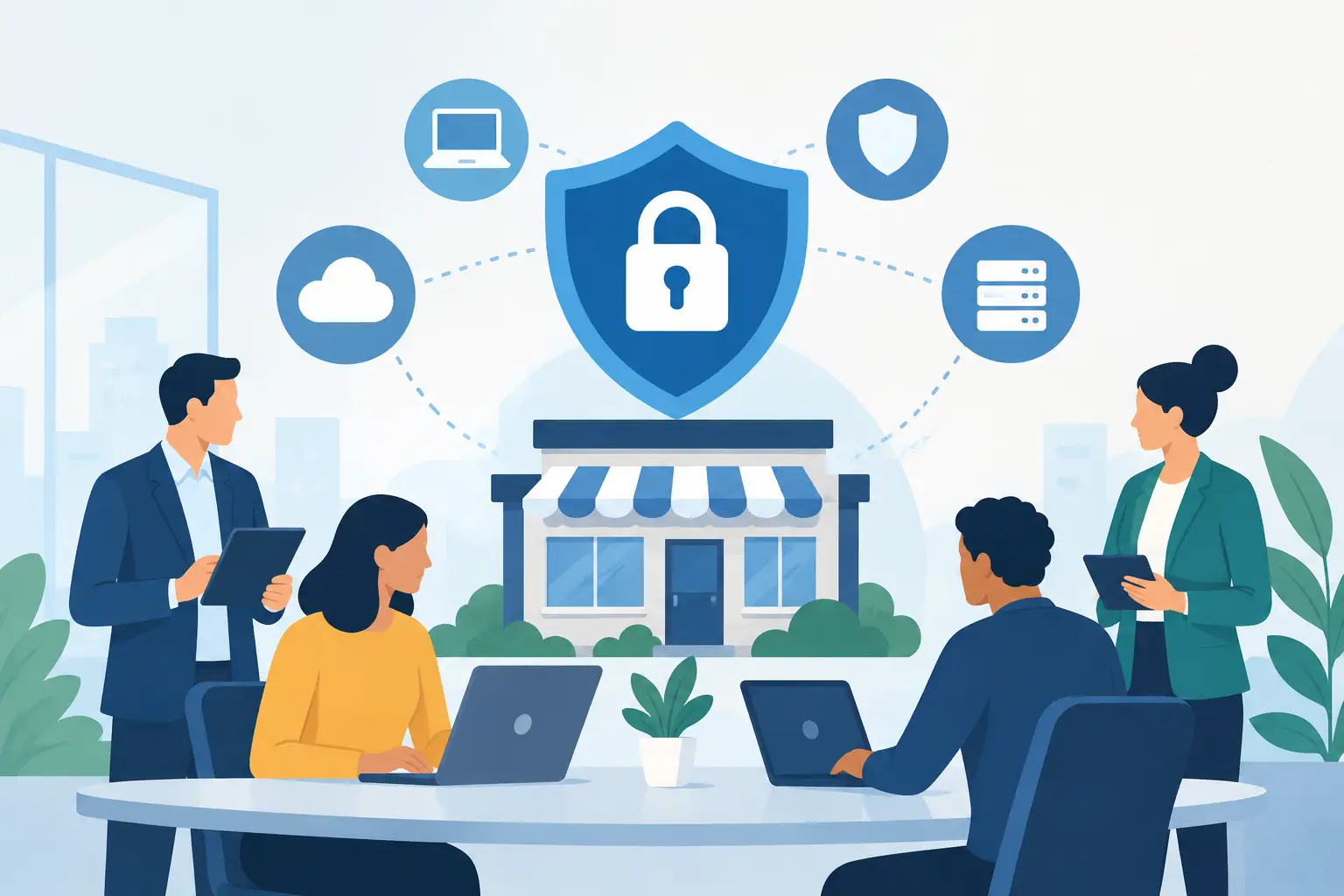

Do SMEs need cybersecurity? For most businesses, the more useful question is what a cyber incident would cost if staff could not access systems, customer data was exposed, or invoices were diverted to a criminal’s bank account. Cybersecurity is no longer a concern reserved for large enterprises. It is a practical requirement for any SME that relies on email, cloud software, online payments, connected devices or suppliers’ data to keep trading.
A small business may have fewer systems than a large organisation, but it can be harder to absorb disruption. One compromised Microsoft 365 account, an encrypted file server or a failed backup can stop work quickly. The financial impact is only part of the problem. Lost customer confidence, missed deadlines and pressure on a small team can be far more difficult to recover from.
Why SMEs need cybersecurity as a business function
Cybersecurity protects the day-to-day operation of the business. It helps keep people productive, data available and communications trustworthy. That makes it closely connected to IT support, cloud services, backup and business continuity rather than a separate technical project to revisit once a year.
Attackers do not only target high-profile companies. SMEs are often targeted because they may have limited internal IT resources, inconsistent security controls or staff who are already busy with operational work. Automated phishing campaigns and password attacks can reach thousands of organisations at very little cost to the criminals. A business does not need to be famous to be profitable to target.
There is also a growing chain of responsibility. Customers, insurers, banks and larger suppliers increasingly expect evidence that an organisation can protect data and respond to an incident. Even where a formal requirement does not apply, being able to demonstrate sensible controls can support tenders, client conversations and insurance applications.
The right level of protection depends on the business. A five-person professional services firm has different risks from a manufacturer with warehouse systems, remote engineers and operational technology. Neither necessarily needs a full in-house security team. Both need clear ownership, well-managed systems and a realistic plan for when something goes wrong.
The threats that cause the most disruption
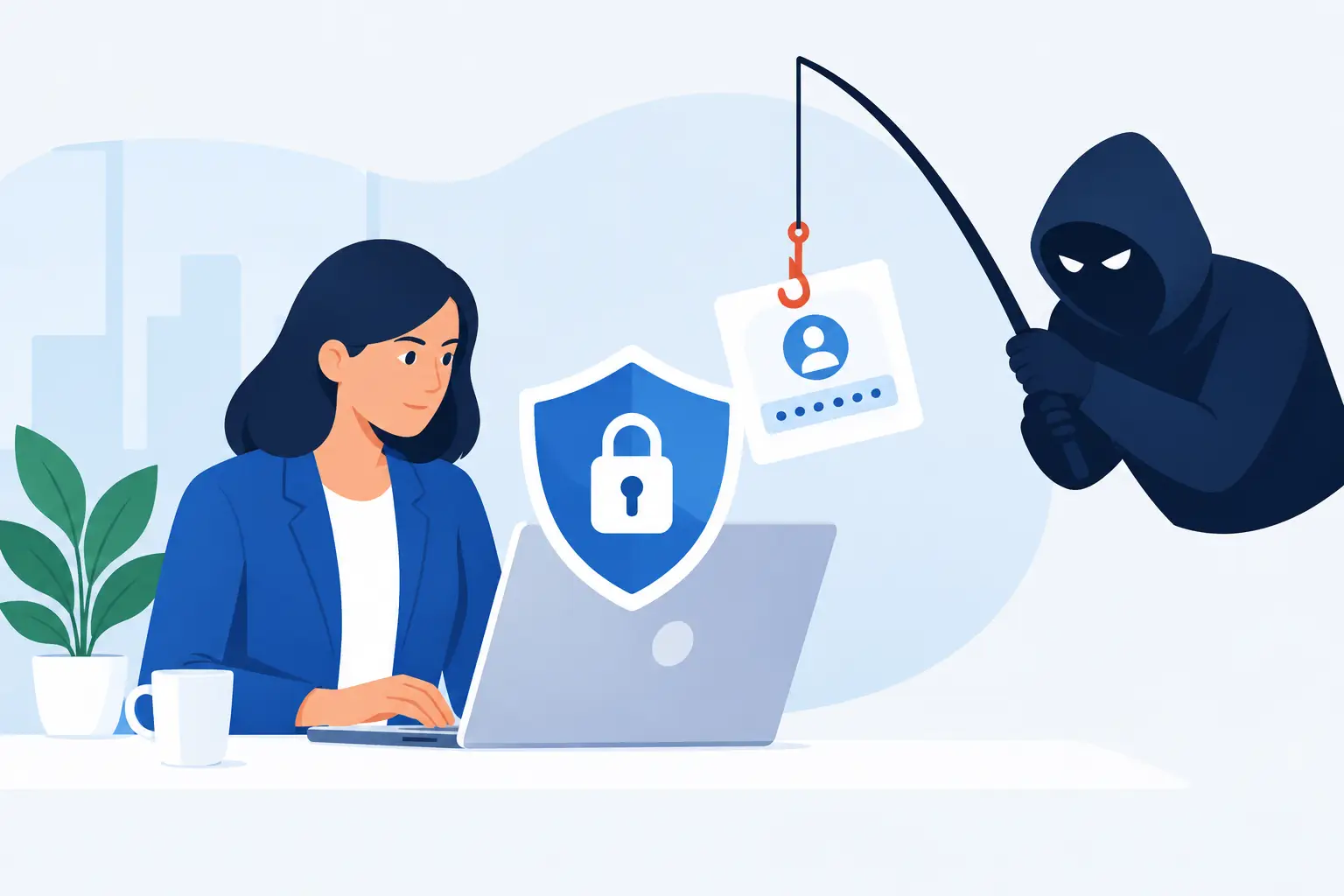
Phishing remains one of the most common routes into a business. A convincing email may imitate a supplier, colleague or senior manager and ask someone to open a file, reset a password or change payment details. The message does not have to fool everyone. It only has to fool one person with access to the right account.
Ransomware is another serious concern. Criminals can encrypt files, steal information before locking systems, then demand payment to prevent publication. Paying does not guarantee recovery, and a backup that is permanently connected to the same network may also be affected. Recovery planning therefore matters as much as prevention.
Weak passwords, unpatched devices and former employees’ accounts create quieter but equally damaging opportunities. So do unmanaged mobile phones, ageing office equipment and cloud applications bought outside an agreed IT process. These issues build up over time, particularly when a business has grown quickly or moved to hybrid working without reviewing how access is controlled.
What good SME cybersecurity looks like
Effective cybersecurity is not a shelf full of products. It is a set of managed controls that work together and are reviewed as the business changes. The aim is to reduce the chance of an incident, limit the damage if one occurs and restore normal operations quickly.
A practical starting point is to make sure the basics are in place:
- Multi-factor authentication should protect email, cloud applications, remote access and administrator accounts. A stolen password should not be enough to enter a system.
- Devices need centrally managed updates, endpoint protection and sensible user permissions. Staff should not routinely have administrator access simply because it is convenient.
- Backups should be automated, monitored, protected from alteration and tested through real restoration exercises. A backup is only valuable when the business can recover from it.
- Staff need short, regular guidance on phishing, password use, payment fraud and reporting suspicious activity. Training works best when it reflects the decisions people make at work.
- A documented response process should set out who to contact, what to isolate and how decisions will be made during an incident. This reduces delay when pressure is highest.
These measures are not identical in every business. For example, multi-factor authentication can introduce friction for staff using shared or specialist devices, while strict access controls can slow an urgent task. The answer is not to remove protection. It is to design controls around how people actually work, then provide support when access needs to change.
Security and business continuity belong together
Cybersecurity is often discussed as preventing an attack. Prevention matters, but no organisation can guarantee that every malicious email, software flaw or supplier issue will be stopped. A resilient SME plans for recovery as well.
That means knowing which systems are essential, how long the business can operate without them and who is responsible for bringing them back. For some firms, email and telephony must be restored first. For others, it may be line-of-business software, customer records, production systems or secure remote access. Priorities should reflect the real cost of downtime, not simply the order in which systems were installed.
A credible recovery plan is tested, not assumed. Can files be restored to a clean location? Can staff work if the office network is unavailable? Are emergency contact details accessible outside the affected systems? These questions turn a theoretical policy into a workable continuity plan.
For SMEs without a large internal IT department, a managed provider can bring security monitoring, patching, backup oversight and incident support into one ongoing service. This gives the business a defined point of accountability rather than a collection of disconnected suppliers. Host-It supports Dublin SMEs in this way by combining day-to-day IT management with security and recovery planning.
When should an SME invest more?
Every SME should maintain a core security baseline, but some circumstances justify additional protection. Businesses handling sensitive personal information, financial details, health records or commercially valuable client data may need stronger access controls, monitoring and compliance support. The same applies to firms with remote workforces, multiple sites, complex supplier networks or a high dependency on online services.
A recent change is often a useful trigger for a security review. Moving to Microsoft 365, opening a new office, adopting cloud software, introducing VoIP, allowing more remote work or acquiring another business can all create new access routes and overlooked risks. Security should be considered during the change, not added after problems appear.
Insurance can also be a prompt, though it should not be the only reason to act. Insurers may ask about multi-factor authentication, backups, patch management and staff awareness before offering cover. Meeting those requirements can improve the organisation’s position, but the greater value is avoiding the incident that leads to a claim in the first place.
Start with a clear view of the risks
The best first step is not buying the most expensive security tool. It is understanding what systems, data and accounts the business relies on, where they are held and who can access them. From there, identify the most likely ways operations could be disrupted and address the gaps in order of business impact.
Keep the plan proportionate. A small team needs security that is understandable, manageable and supported, not a complicated programme that gets ignored after launch. With the right controls and a partner that responds when issues arise, cybersecurity becomes part of keeping the business available, productive and trusted – exactly where it belongs.