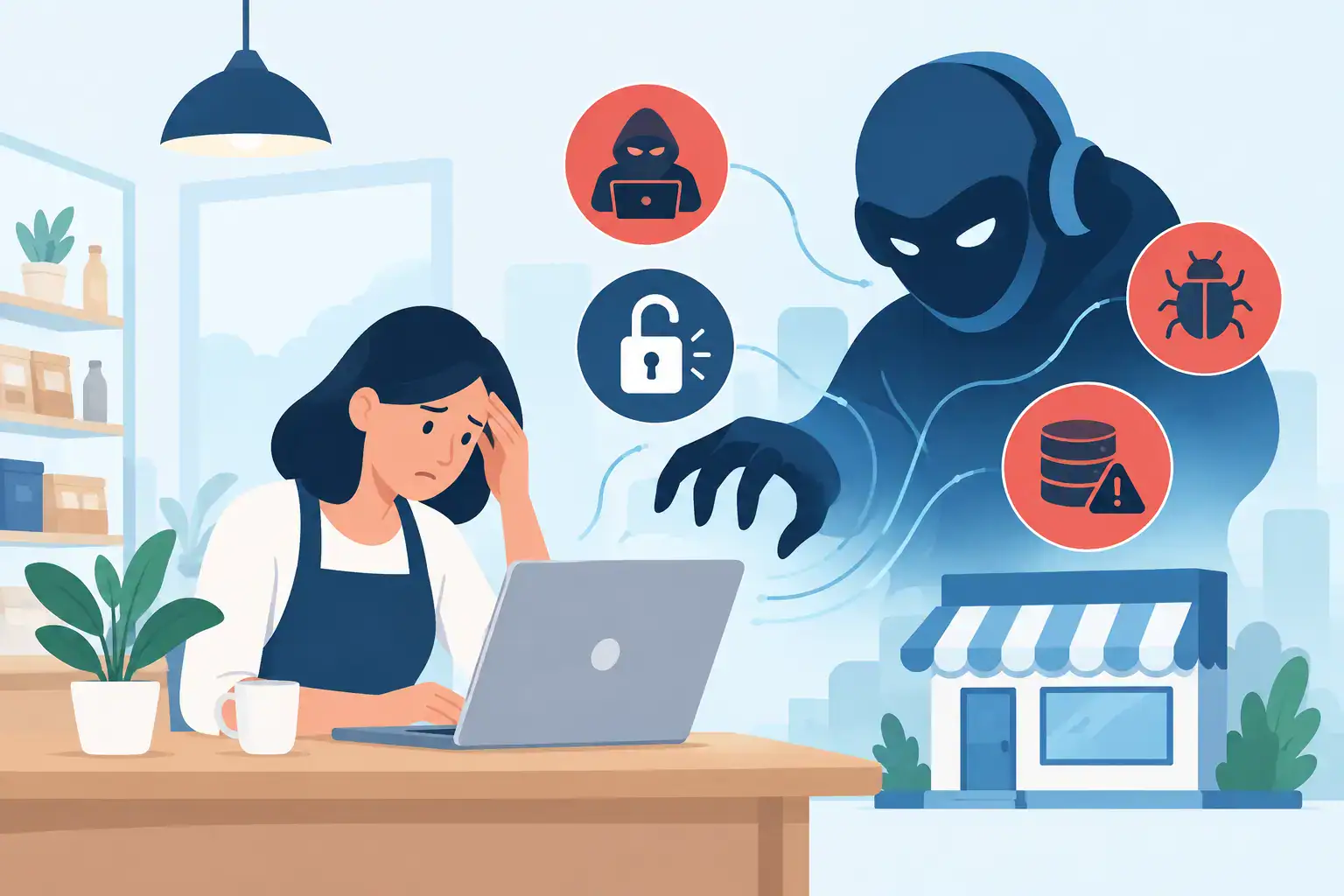

A finance employee receives a call that sounds exactly like the managing director. The caller is in a rush, asks for an urgent supplier payment and knows the names of current projects. Ten minutes later, the money is gone. This is no longer a far-fetched scam. AI threats to small businesses are making familiar attacks faster, more convincing and harder for busy teams to spot.
For SMEs, the issue is not whether to use AI or avoid it entirely. Used well, AI can save time, assist customer service and reduce repetitive administration. The risk comes when tools are introduced without clear controls, or when criminals use the same technology to exploit trusted people and everyday business processes.
Why AI changes the risk for small businesses
Cyber criminals have always relied on urgency, impersonation and weak passwords. AI gives them scale and polish. A scammer no longer needs excellent written English to produce a persuasive phishing email. They can generate dozens of tailored messages in minutes, referring to a business’s suppliers, services or senior staff.
This matters especially to smaller organisations because responsibilities often overlap. The person approving invoices may also manage suppliers, payroll and office administration. There may be no dedicated security team checking every unusual request. An attack only needs to succeed once to interrupt operations, expose confidential information or create a significant financial loss.
AI also lowers the cost of deception. Voice cloning and manipulated video can be created from small amounts of publicly available audio or footage. Public posts, company websites and professional profiles give attackers useful details to make a false request appear credible. A familiar voice or a convincing email address is no longer enough proof that a request is genuine.
The AI threats to small businesses that deserve attention
More convincing phishing and payment fraud
AI-written phishing emails are less likely to contain the spelling mistakes and awkward wording that once made scams easier to recognise. Messages can be tailored to a particular job role, supplier relationship or recent event. An accounts team may receive a plausible request to amend bank details, while an employee may be sent a realistic password-reset message.
Business email compromise remains one of the most damaging outcomes. Attackers may gain access to a real mailbox, study conversations, then use AI to mimic the tone of the sender. From there, they can request payments, redirect invoices or persuade staff to share information. The technology is new, but the control is not: payment detail changes and high-value transfers should always be verified using an independently sourced phone number or an agreed approval process.
Deepfake calls and video meetings
A cloned voice can turn a routine request into a high-pressure incident. Criminals may impersonate a director, IT provider or supplier and ask an employee to share a verification code, buy gift cards, transfer funds or grant remote access.
Video deepfakes are also improving, although they are not flawless. Treat an unexpected request involving money, credentials or confidential data as something to verify out of band, even if it arrives on a familiar call or video platform. A simple internal rule helps: stop the conversation, call the person back on a trusted number and confirm the request. That small delay can prevent a major loss.
Sensitive data entered into public AI tools
Generative AI tools can be useful for drafting, research and summarising. Problems begin when staff paste customer records, financial data, contracts, source code, health information or internal plans into a tool that has not been approved for business use.
The exposure depends on the tool, its account settings, contractual terms and how the provider handles submitted content. It is not safe to assume that every free or consumer-grade service offers the privacy, retention controls or audit trail a business needs. For organisations handling personal data, this can create data protection obligations as well as commercial risk.
A practical policy should state what information may never be entered into public AI tools, which tools are approved, and who can authorise an exception. It should also make clear that AI output is not automatically accurate, confidential or suitable for sending to customers without review.
Faster ransomware and vulnerability attacks
AI can help attackers identify likely targets, write malicious code variations and create more believable messages that deliver malware. It can also make reconnaissance quicker by processing public information about a company’s systems, people and suppliers.
That does not mean every cyber attack is now fully automated or impossible to stop. Many successful incidents still begin with known weaknesses: unpatched software, exposed remote access, weak passwords, excessive user permissions or backups that have never been tested. AI increases the pressure to get the fundamentals right because attackers can move more quickly when they find a gap.
Unsafe AI integrations and shadow IT
Employees often adopt useful tools before formal approval, particularly when they are trying to work faster. A browser extension, meeting transcription service or AI assistant may request access to email, calendars, cloud storage or customer systems. If that access is excessive or the supplier’s security is weak, it can create a route into valuable business data.
The answer is not to discourage staff from raising productivity ideas. It is to create a straightforward approval route. Review what data the tool accesses, whether multi-factor authentication is available, where data is stored, how access can be removed and what happens if the supplier suffers an incident. For higher-risk systems, involve your IT and data protection advisers before connecting them.
Build controls around people, process and technology
Security awareness training needs to reflect the way attacks now look. Telling staff to watch for poor grammar is no longer sufficient. Training should use realistic examples of AI-assisted phishing, fake invoice requests and voice impersonation, while making it clear that reporting a suspicious message is the right action, even if it proves harmless.
The most effective protection is usually a combination of safeguards rather than a single security product. Focus on the business processes that attackers want to bypass, particularly payments, password resets, bank detail changes and access requests. Build verification into those processes so that an urgent message cannot override normal checks.
A sensible starting point includes these five measures:
- Require multi-factor authentication for email, cloud platforms, remote access and administrator accounts.
- Use a separate, verified communication channel for payment changes and unusual financial requests.
- Keep operating systems, applications, firewalls and endpoint protection updated and actively monitored.
- Maintain encrypted backups that are separated from day-to-day systems, then test restoration regularly.
- Limit access to sensitive data and remove accounts promptly when staff or suppliers no longer need them.
These controls are not equally complex. Multi-factor authentication and better payment verification can often be introduced quickly. Improving backup resilience, segmenting networks or replacing unsupported systems may take more planning. The priority should reflect the data you hold, the systems you depend on and the cost of downtime to your business.
Give staff a clear AI policy they can follow
A useful AI policy should be short enough to be read and specific enough to guide a real decision. Staff need to know which tools are permitted, what business information is prohibited, and when a manager or IT provider should be consulted. Avoid vague wording such as “use AI responsibly” without defining what responsible use means in practice.
It should also set expectations for human review. AI can produce incorrect facts, invented references or inappropriate language with considerable confidence. If employees use it to prepare customer communications, proposals or internal guidance, a named person should review the final output before it is relied upon or sent externally.
For many SMEs, the policy will need to evolve. A marketing team using AI to brainstorm social posts presents a different level of risk from a team using it to process customer data or make employment decisions. Start with the highest-risk uses and revisit the policy as tools and working practices change.
Prepare for the moment something feels wrong
When an employee suspects a phishing email, deepfake call or data mistake, speed matters. They should know who to contact and feel able to report it without blame. Delays caused by uncertainty can allow an attacker to access more systems, alter mailbox rules or move money.
Your incident plan should cover immediate actions: disconnecting a compromised device where appropriate, changing credentials, preserving evidence, contacting the bank quickly if a payment was made, and checking whether other accounts or mailboxes have been affected. It should also identify who can make decisions if a key director is unavailable.
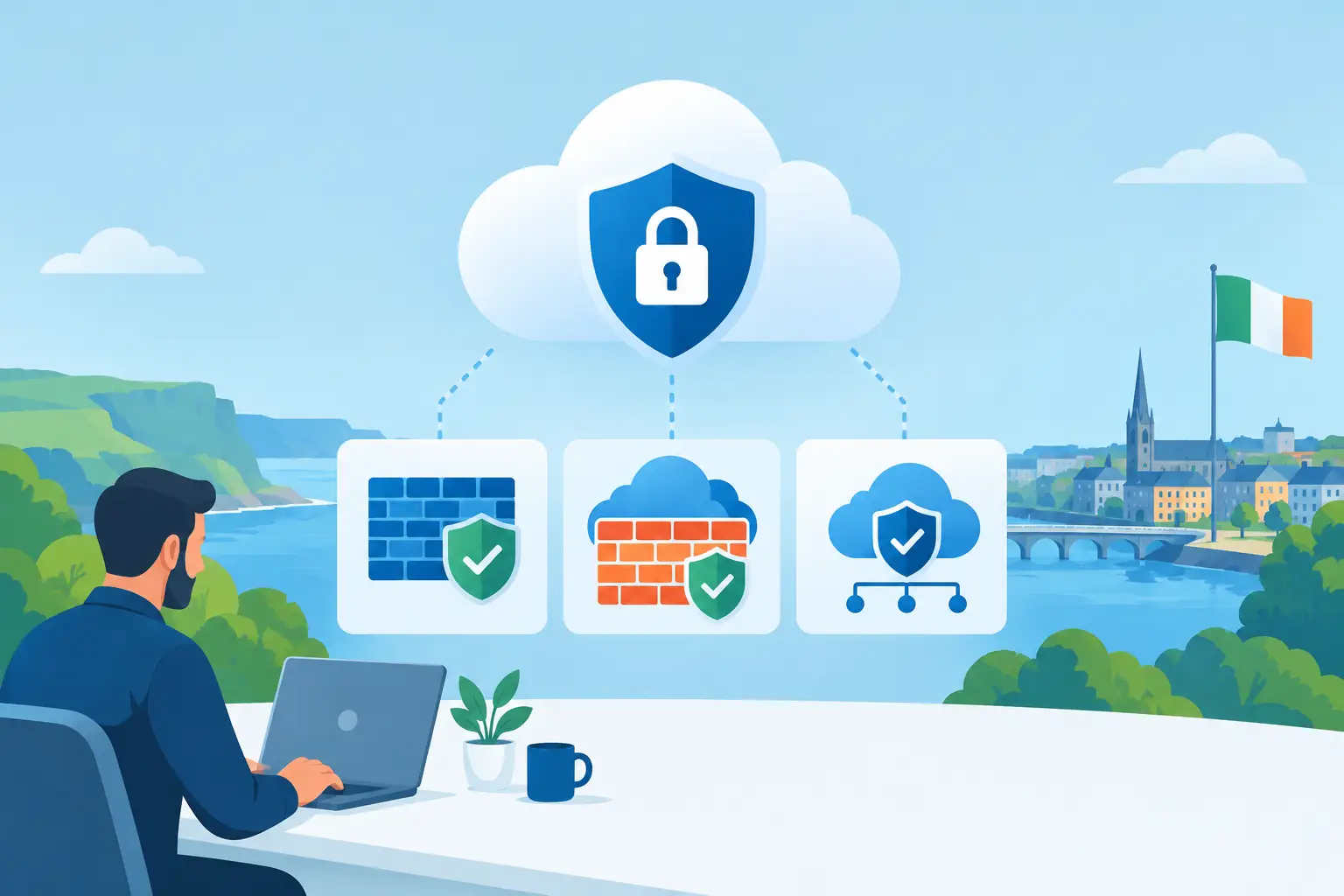
A managed IT partner can help turn these measures into day-to-day protection through monitored security, patching, secure backups, access management and a tested recovery plan. For Dublin SMEs without a large internal IT department, that ongoing support can provide both technical oversight and a clear point of contact when an incident needs urgent attention.
AI will continue to change how people work and how criminals attack. The most dependable response is not fear or blanket restriction. It is to give staff safe tools, make critical processes harder to impersonate, and ensure that help is ready before a convincing request becomes a costly interruption.