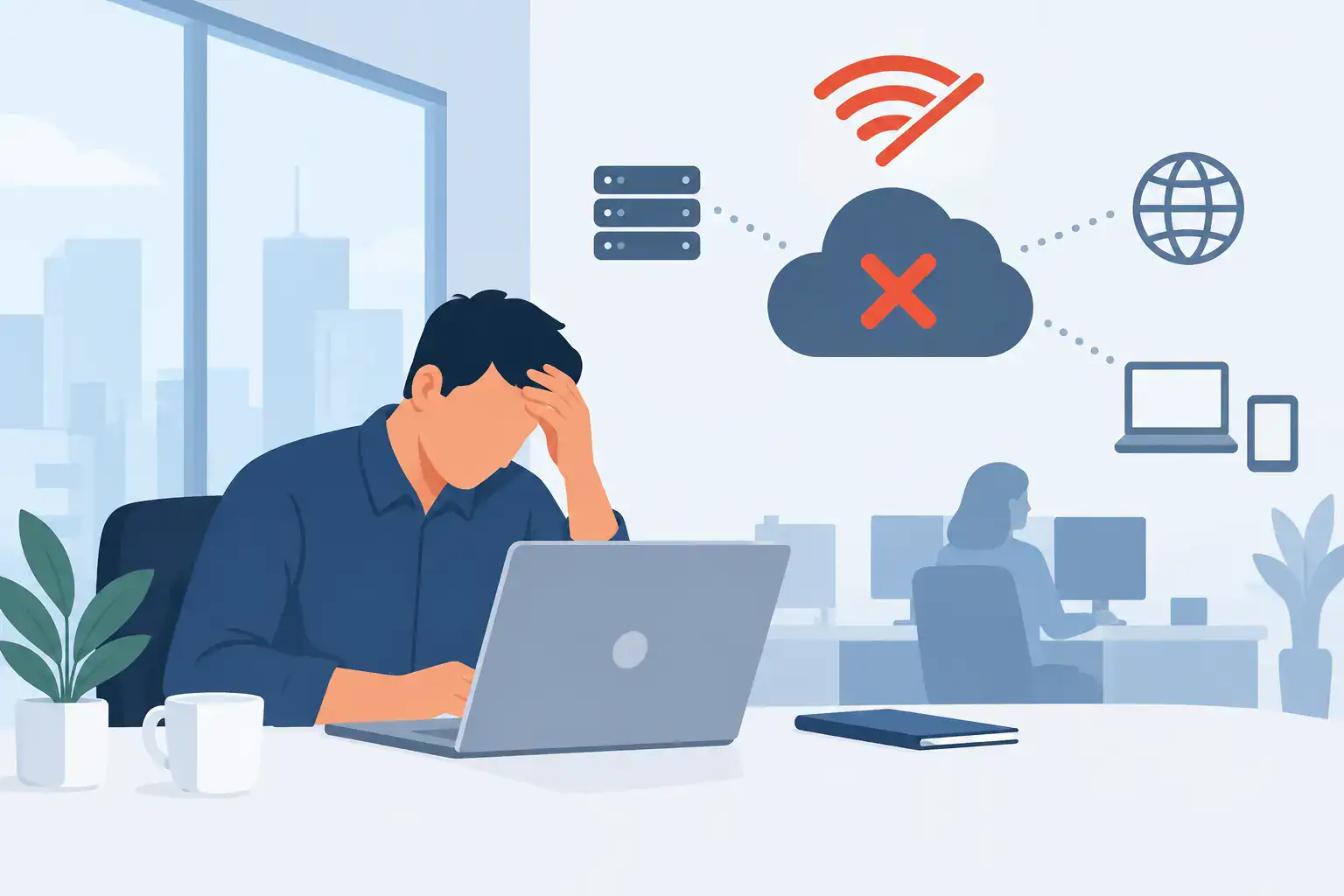

A server failure at 9am, a suspicious email opened by a member of staff, or an office move with no working phones can stop a small business far more quickly than most owners expect. The real question behind why outsource IT is not whether technology matters. It is whether your business has the capacity, expertise and cover to keep it working when pressure is highest.
For many SMEs, technology has grown beyond the point where occasional call-out support is enough. Staff need secure access to files, customers expect quick responses, systems must be backed up, and cyber threats need active attention. Outsourcing gives you access to the people, processes and tools needed to manage that responsibility without building a full internal IT department.
Why outsource IT instead of relying on ad-hoc fixes?
Reactive IT support can appear cheaper until something goes wrong. If a provider is only called after an issue has disrupted the business, they are dealing with the symptoms under time pressure. The immediate problem may be resolved, but the underlying cause can remain – whether that is ageing hardware, poor patching, weak passwords, unreliable connectivity or an incomplete backup.
Managed IT support takes a different approach. Your systems are monitored, maintained and reviewed on an ongoing basis. Potential issues can be identified before they become major incidents, while routine work such as software updates, user support and security checks is handled consistently.
This matters because downtime is rarely limited to one failed device. A staff member unable to access systems may delay a sales enquiry, invoice, customer appointment or supplier order. If an entire team loses access, the operational and reputational cost rises quickly. Proactive support helps reduce those interruptions and gives your people a clear route to help when they need it.
Access wider expertise without the cost of a larger team
An in-house IT employee can be a valuable asset, particularly in a business with complex internal systems. But one person cannot be a specialist in every area, and they cannot provide cover around the clock or during holidays, illness and busy periods.
Outsourcing gives SMEs access to broader technical knowledge across day-to-day support, cloud services, cyber security, backup and recovery, connectivity and communications. Rather than trying to recruit for every skill your business may need, you can work with a team that brings the relevant expertise when it is required.
That does not mean losing control. A good outsourced provider should explain issues in practical business terms, advise on priorities and work around how your team operates. The aim is not to make technology more complicated. It is to give decision-makers clearer choices and dependable support behind them.
The right level of support depends on your business
Not every organisation needs the same service. A small office with cloud-based applications has different needs from a business with several sites, sensitive client data or a mixture of older and newer systems.
The value of outsourcing comes from matching support to the risks you actually face. That may mean helpdesk cover and device management for one company, while another may need a cloud migration plan, secure remote access, VoIP phones and a tested recovery process. A tailored service avoids paying for unnecessary complexity while ensuring critical gaps are not ignored.
Better cyber security is a business priority
Cyber security is no longer only a concern for large companies. SMEs are targeted because attackers know that smaller organisations may have fewer controls, limited internal expertise and less time to respond. Phishing emails, compromised passwords, ransomware and unauthorised access can all lead to lost data, disruption and costly recovery work.
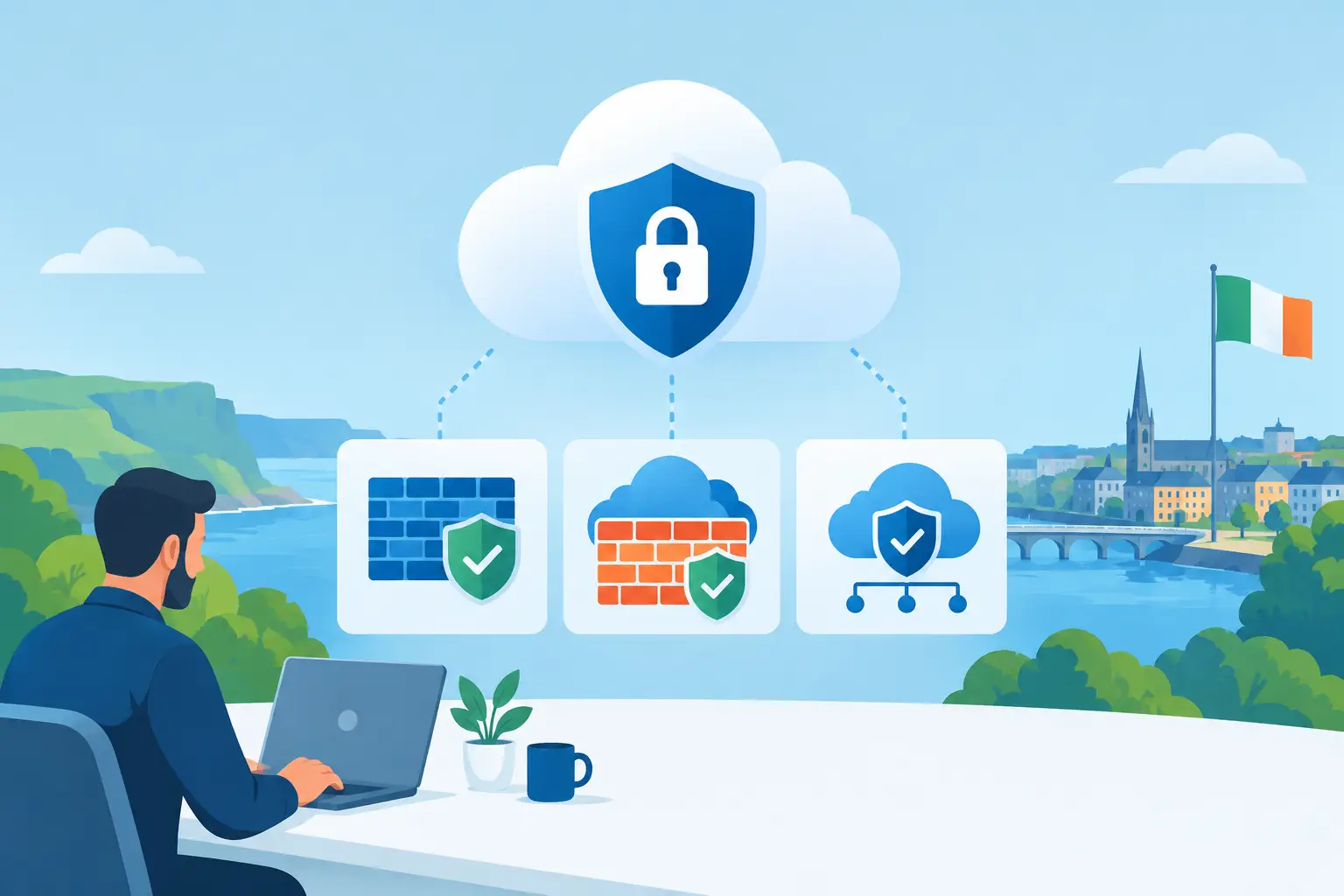
Outsourcing IT can improve your security posture by making protection an ongoing activity rather than an annual task. This includes keeping systems patched, managing user access, monitoring for unusual activity, improving email security and supporting staff with practical security awareness.
No provider can promise that a cyber incident will never occur. What they can do is help reduce the likelihood of an incident, limit the damage if one happens and ensure there is a clear response plan. That preparation is often the difference between a contained disruption and a prolonged business crisis.
Reliable backup is not the same as business continuity
Many businesses believe they are protected because files are stored in the cloud or copied to a backup drive. But a backup only helps if it is complete, secure and capable of being restored when needed. It also does not answer wider questions: how quickly can staff return to work, which systems must be restored first, and who is responsible for the recovery process?
An outsourced IT partner can help put backup and recovery into a broader business continuity plan. This means identifying vital systems, setting realistic recovery objectives and checking that backups can be restored successfully. It can also include planning for hardware failure, cyber incidents, connectivity outages and office disruption.
For Dublin businesses, this can be particularly useful when a move, expansion or change in working arrangements affects several services at once. Internet connectivity, phones, devices, file access and security all need to be considered together. Planning this work with one accountable provider reduces the risk of gaps between suppliers.
More predictable IT costs and fewer surprises
IT costs can become difficult to manage when support is entirely reactive. A failed server, urgent replacement laptop or security incident can create an unplanned bill at exactly the wrong time. It may also force rushed decisions that do not suit the business in the long term.
A managed service relationship makes costs more predictable by setting out regular support and maintenance as an ongoing investment. You still need to budget for hardware refreshes, licences and larger projects, but these can be planned rather than discovered during an emergency.
Predictability should not be confused with choosing the lowest monthly price. The cheapest arrangement may exclude important areas such as cyber security, backup monitoring, strategic advice or on-site assistance. When comparing providers, look at what is included, how quickly support is available, what happens during a serious incident and whether the service can grow with you.
Give staff time to do their actual jobs
In many SMEs, the person who knows the most about computers becomes the unofficial IT department. It may be an office manager, finance lead, operations manager or business owner. They reset passwords, chase suppliers, troubleshoot printers and try to make sense of security alerts alongside their real responsibilities.
That arrangement is understandable, but it is not sustainable. It takes skilled people away from their core work and leaves important technical decisions resting on individuals who may not have the time or training to make them.
Outsourced support gives staff a defined place to go for help. It also helps standardise how devices, accounts and systems are managed, which makes onboarding and offboarding employees safer and more efficient. When technology works reliably in the background, teams can spend more time serving customers and moving the business forward.
One partner can reduce supplier confusion
Technology problems often cross service boundaries. A video call issue may be caused by the network, a laptop setting, the internet connection or the phone platform. A security issue may involve email, user accounts, devices and backups. When each element is managed by a different supplier, it can be difficult to establish ownership quickly.
Working with an integrated IT partner can make this easier. Support for infrastructure, cloud systems, security, communications and recovery can be coordinated through one team that understands the wider environment. That does not remove every third party, but it gives your business a clearer point of accountability when something goes wrong.
Host-It supports Irish SMEs in this way, bringing day-to-day IT operations and business continuity needs together rather than treating each issue as a separate project.
When outsourcing may not be the whole answer
Outsourcing is not an excuse to disengage from IT decisions. Business leaders still need to set priorities, approve investment and make sure their provider understands operational changes. If you have a large internal IT team, highly specialised systems or strict sector-specific requirements, a hybrid model may be more appropriate than fully outsourced support.
The strongest arrangements are collaborative. Your provider manages and advises on the technology, while your business shares plans for growth, new sites, staffing changes, customer requirements and risk concerns. That context allows IT support to become more useful and less reactive.
A practical starting point is to review the last 12 months. How much downtime did you experience? Which problems interrupted staff most often? Could you recover critical data confidently? And if a key system failed tomorrow, would everyone know what to do?
Those answers will show where support is needed most. Choosing to outsource IT is ultimately about giving your business the confidence to keep operating, even when technology does not go to plan.
If outsourcing is on your list, our guide to working with an Irish MSP explains what is covered and how it is priced.